How to Build a Desk With Storage That Saves Space

Build a space-saving desk by keeping the footprint compact, preserving legroom, and placing storage vertically or to one side. The most practical layout is usually a simple work surface with one concealed storage zone, one lighter storage zone, and planned cable management.
Learning how to build a desk with storage starts with one core idea: save floor space by making every inch work harder. The best compact desks combine a right-sized work surface with storage that rises upward, tucks underneath, or disappears behind clean front panels so the room still feels open.
- Start with purpose: Define whether the desk is for laptop work, monitors, studying, or creative supplies.
- Protect legroom: Avoid deep cabinets under both sides if the desk will be used for long.
- Choose practical materials: Plywood is often the best balance of strength, stability, and finish flexibility.
- Use edited storage: One drawer bank plus shelves usually works better than oversized cabinetry in a small.
- Plan infrastructure early: Cable routing, ventilation, and wall support should be decided before assembly.
How to Build a Desk With Storage That Saves Space: The Best Approach for 2026 Homes
A space-saving desk is not just a smaller desk. It is a desk planned around movement, access, and storage density. In many homes, that means fitting work into a bedroom corner, a guest room wall, a studio apartment niche, or a shared family area without making the room feel crowded. A successful build balances three things at once: a usable top, enough legroom, and storage that supports daily habits rather than getting in the way.
Define the desk’s job before you cut materials
Before choosing lumber, hardware, or a finish, decide what the desk needs to do every day. A laptop-only setup needs far less depth and cable routing than a dual-monitor workstation. A family desk may need shallow drawers for chargers, pens, and mail, while a creative setup may need open cubbies for sketchbooks, paper, or tablet accessories.
It helps to list the items that must live in or on the desk full time. That list usually reveals whether you need drawers, shelves, a keyboard tray, vertical monitor risers, or a file compartment. If your needs are simple, a lighter design may work better than a heavy cabinet-style build. If you are building for focused writing, the planning logic is similar to a small writing desk project, but storage adds more measurement and hardware decisions.
Choose a compact footprint with vertical or hidden storage
The easiest way to save space is to keep the desk footprint modest and move storage upward or inward. Instead of widening the desk, add a narrow shelf stack at one end, a low hutch above the top, or a recessed cubby under the work surface. These choices preserve open floor area while increasing capacity.
Hidden storage also helps a small room look calmer. A slim drawer bank, a flip-down front, or cabinet doors over upper shelves can conceal visual clutter. Open shelving is useful, but in a tight room it can quickly look busy unless the contents are edited carefully. If you want a desk that feels lighter, combine one closed storage zone with one open zone rather than making every section identical.
Plan cable management, legroom, and daily reach zones from the start
Storage should never steal the space your body needs. Leave enough width for your knees, enough depth for your chair to tuck in, and enough surface area for your main tasks. Think about what needs to be within arm’s reach: keyboard, notebook, task light, charger, and perhaps one drawer for the items you use every day.
Cable planning is easiest before assembly. A simple rear gap, grommet hole, or hidden channel can keep charging cords and monitor cables from tangling with drawers or brushing your legs. If the desk will sit against a wall, note where outlets are located so your storage tower or cabinet side does not block access.
In a small room, the most comfortable desk often has fewer deep compartments than expected. Shallow, easy-reach storage usually performs better than oversized cabinets that reduce legroom and collect unused items.
What to Look for Before Building a Space-Saving Storage Desk
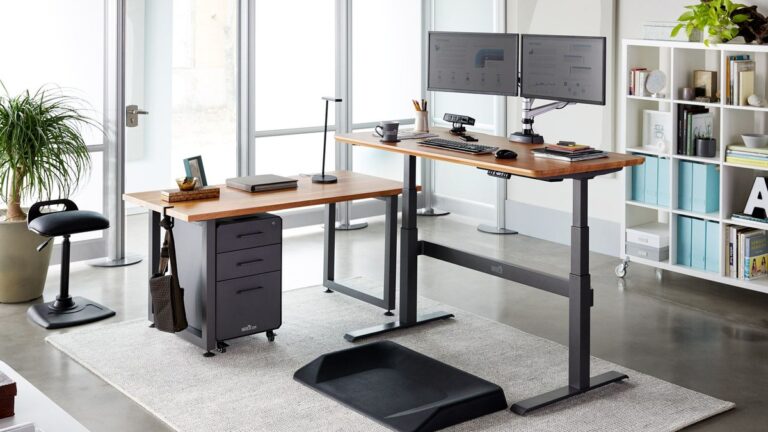
A compact desk design highlights storage, measurements, and required floor space.
Planning mistakes usually happen before the first cut. A desk can look perfect on paper and still fail if it cannot clear a doorway, blocks a closet swing, or leaves no room for a chair to move. Good prep work prevents wasted materials and awkward layouts.
Room dimensions, doorway access, and placement constraints
Measure the wall width, the full room depth, baseboard projection, window trim, outlet placement, and the swing of nearby doors. Then measure the route into the room. A one-piece desktop or side cabinet may be difficult to move through narrow hallways or stair turns, so a knock-down or modular design can be the safer choice.
Also think about what happens around the desk once it is in place. Can a dresser drawer still open nearby? Will curtains brush the desktop? Is there enough clearance behind the chair when someone walks through the room? These practical checks matter as much as the desk itself.
Storage needs for laptops, monitors, paperwork, and accessories
Storage should match the equipment, not the other way around. A laptop user may only need one pencil drawer and a shelf for a printer. A monitor user may need a deeper top, a cable tray, and a shelf or cubby sized for a docking station. Paper-heavy work may justify a file drawer, while digital-first work often benefits more from a narrow shelf tower and a concealed charging drawer.
If the desk will support drawing, crafting, or content planning, group supplies by frequency of use. Daily items belong in top drawers or open trays. Occasional tools can live higher up or behind doors. Readers building a creative workstation may also want ideas from this guide on how to organize a desk for artist work.
Weight capacity, ergonomics, and seated comfort
The desktop must support not only the visible load but also concentrated points of pressure. Monitors, desktop computers, printers, and leaning body weight all add stress. Thicker tops, aprons, stretchers, or metal support rails may be needed depending on span and material.
Comfort matters just as much. A desk that is too high strains shoulders, while one that is too shallow pushes screens too close to the eyes. Storage cabinets under both sides can make a desk look balanced, but they often reduce natural seated movement. For long work sessions, preserving open knee space usually improves comfort more than adding one more drawer stack.
Built-in versus modular storage options
Built-in storage creates a cleaner, more integrated look. It can make a small office feel tailored and deliberate, especially when the desk spans a specific wall or alcove. The trade-off is flexibility. Once fixed shelves or drawer banks are built in, changing your setup later becomes harder.
Modular storage is easier to adapt. You might build a simple desk shell and add rolling file units, stackable bins, or a removable shelf tower later. This route is especially useful if your equipment may change or the desk may move to another room.
Who This Desk Style Suits and Which Rooms It Fits Best
A desk with storage is most useful when the room cannot afford extra furniture. Instead of pairing a plain desk with separate carts, shelving, and cabinets, the desk itself becomes the storage hub.
Small home offices, bedrooms, guest rooms, and studio apartments
This style works especially well in compact home offices where every inch counts. It is also a smart fit for bedrooms that need a work zone without feeling like a corporate office. In guest rooms, a narrow desk with closed storage helps the space stay multipurpose. In studio apartments, vertical storage can replace the need for a separate filing cabinet or side shelf.
If the room is very tight, compare your plan with examples of a small writing desk with storage to see whether a lighter, narrower form might already solve the problem without a larger custom build.
Best use cases for remote work, studying, creative work, and family drop zones
For remote work, the ideal setup usually includes a stable top, hidden cable control, one drawer for daily tools, and at least one larger compartment for tech accessories. For studying, a compact top plus open shelving can be enough, especially when books and notebooks need quick access.
Creative work often benefits from mixed storage: shallow drawers for tools, open shelving for materials, and one clear area on the top for active projects. For family drop zones, durability and concealment matter more than specialized office features. A desk near an entry or kitchen-adjacent wall may need mail storage, charger access, and wipe-clean finishes.
When a floating desk, corner desk, or wall-mounted design makes more sense
Not every room needs a traditional freestanding desk. A floating desk can make the floor look more open and simplify cleaning underneath. A corner desk uses otherwise awkward square footage efficiently. A wall-mounted design with shelves above is often the best answer when floor depth is limited.
That said, wall-mounted and floating builds require extra care with wall type, fasteners, and weight support. Always verify load requirements and installation guidance for your wall construction, and consult a qualified installer if the design will carry significant weight.
Best Materials, Hardware, and Specifications for a Durable Build

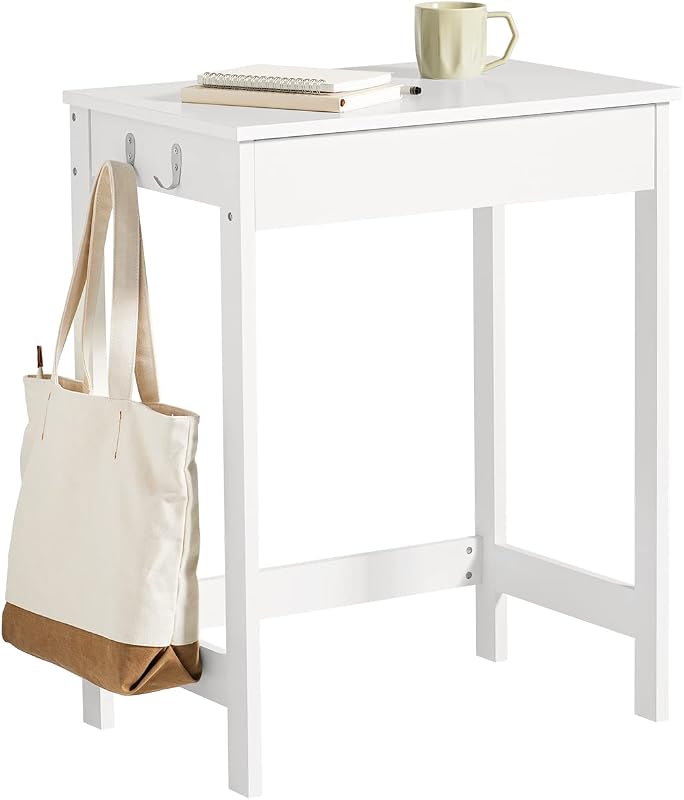
Materials and hardware for a durable desk with built-in storage are laid out.
The best material is not always the most expensive one. For many home office projects, the strongest choice is the one that balances stability, finish quality, weight, and ease of cutting with the tools available.
Plywood, solid wood, MDF, and metal frames compared
Plywood is one of the most practical choices for a storage desk. It is relatively stable, available in multiple thicknesses, and works well for cabinet boxes, desktops, and shelving. Edge banding or solid wood trim can improve the finished look. Solid wood offers warmth and longevity, but it may cost more and requires attention to wood movement, especially on wider tops.
MDF can provide a smooth painted finish and clean edges for built-ins, but it is heavier and more vulnerable to moisture damage than many plywood options. Metal frames are useful when you want a slimmer profile or extra support under a long top. A mixed-material build, such as a plywood cabinet base with a hardwood top or steel legs, often gives a good balance of value and durability.
Drawer slides, hinges, brackets, and anti-tip safety details
Hardware affects daily satisfaction more than many people expect. Good drawer slides improve access and reduce sticking. Hinges matter if you are using cabinet doors or a fold-down front. Brackets and cleats are important for wall-supported sections, hutches, and overhead shelves.
If the desk includes tall shelving, an upper hutch, or a narrow footprint with a heavy top, anti-tip planning matters. Follow the hardware maker’s guidance, check wall type and fastener compatibility, and avoid assuming one anchor type works for every surface.
For wall-mounted shelves, floating desk sections, or tall storage towers, confirm wall material, fastener limits, and total load before installation. If the desk will carry heavy monitors, printers, or books, professional guidance may be the safest route.
Ideal desk height, depth, shelf spacing, and drawer dimensions
Dimensions vary by user and setup, but a few planning principles stay consistent. The desk should allow relaxed shoulders, a comfortable typing position, and enough viewing distance for screens. A laptop-only desk can often be shallower than a monitor desk. Shelves above the work surface should be reachable without forcing you to stand every time you need a notebook or charger.
Drawer depth should reflect what you plan to store. Deep drawers sound useful, but they can become disorganized quickly. Shallow utility drawers are often better for office supplies, while one deeper drawer can handle bulkier accessories. File storage needs its own sizing logic, so confirm the dimensions of the folders or bins you plan to use before building.
Finishes that balance durability, maintenance, and style
Clear finishes highlight wood grain and usually suit natural, Scandinavian, and mid-century inspired rooms. Painted finishes can help a desk blend into trim or wall color, which is helpful when you want built-in storage to feel less bulky. Laminated or melamine-style surfaces can be practical in busy households because they are easy to wipe down, though edge quality and substrate strength vary by product.
Choose the finish based on how the desk will actually be used. A family workspace may benefit from a forgiving painted or laminated surface, while a design-led office may justify the extra effort of a wood top with a durable protective coat.
Smart Space-Saving Desk Designs to Consider Before You Build
The right design depends on the room shape, your storage priorities, and whether you want the desk to visually disappear or stand out as a feature piece.
Desk with drawers on one side and open shelving on the other
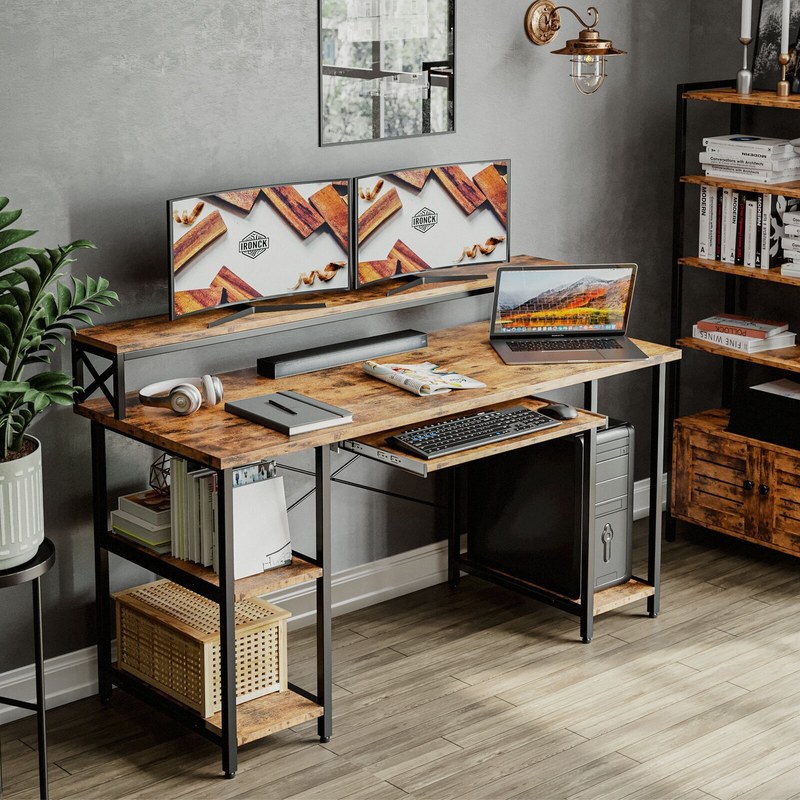
This is one of the most practical layouts for small rooms. One side handles concealed storage for clutter-prone items, while the other side keeps the desk from looking too heavy. It also creates flexibility: the shelving side can hold books, baskets, or a CPU, depending on your setup.
Visually, asymmetry often works better than two bulky drawer stacks. It keeps the desk lighter and preserves more seated movement.
Wall-mounted desk with overhead storage
A wall-mounted desk is ideal when floor space is tight and you want a clean, airy look. Overhead shelves or cabinets can hold supplies without widening the desk below. This format works especially well for laptop work, studying, and occasional home office use.
If you like this approach, nearby vertical storage such as a picture ledge can also help keep the desktop clear. Hurrell Editions has a useful guide on how to build a picture ledge if you want to extend storage or display upward in a coordinated way.
Corner desk with integrated file storage
Corner desks make excellent use of underused room geometry. Integrated file storage can sit on the less active side, leaving the primary typing or writing zone open. This layout is especially effective for remote work setups that need one monitor, a printer, and paper storage without taking over the center of the room.
The main caution is depth. Corner builds can become oversized quickly, so keep the active work zone shallow enough to remain comfortable.
Fold-down or secretary-style desk for multipurpose rooms
For guest rooms, hall niches, or studio apartments, a fold-down or secretary-style desk can be the smartest option. It hides work supplies when not in use and allows the room to shift back to its main purpose. Built-in cubbies behind a drop front can store chargers, paper, and small accessories efficiently.
This design is best for lighter-duty work rather than large monitor setups. If you need an all-day workstation, a more permanent top usually performs better.
| Option | Best For | Key Consideration |
|---|---|---|
| One-side drawers, one-side shelves | Balanced daily home office use | Keeps storage practical without looking too bulky |
| Wall-mounted with upper storage | Very small rooms and light setups | Requires careful wall support planning |
| Corner desk with file storage | Remote work in awkward layouts | Can become too deep if not measured carefully |
| Fold-down secretary style | Multipurpose rooms | Usually better for lighter equipment |
Styling Ideas That Keep a Storage Desk Functional and Visually Light
A well-built desk can still feel too heavy if the styling is dense. In small rooms, visual weight matters almost as much as physical size.
Matching the desk to existing decor, flooring, and wall color
If you want the desk to blend in, echo the room’s trim color, wall tone, or wood floor undertones. A painted desk in a similar shade to the wall can make storage look quieter. If you want the desk to read as furniture rather than built-in architecture, choose a contrasting wood tone or a mixed-material look with metal details.
Try to repeat at least one existing finish in the room, whether that is black hardware, warm oak, walnut, white paint, or brushed metal. That repetition creates cohesion even when the desk itself is custom.
Using baskets, trays, and closed storage to reduce visual clutter
Open shelves look best when they hold a few grouped items rather than many unrelated objects. Baskets, magazine files, and trays can make open storage feel intentional. Closed drawers and doors are still the easiest way to keep a compact office from looking chaotic.
For creative spaces, small bins and categorized containers often work better than stacking loose supplies. If your room also doubles as a studio, this guide on how to organise art supplies in a small space offers useful ideas that pair well with desk storage planning.
Layering task lighting, art, and seating without overcrowding the room
Choose one good task light rather than several small lamps competing for surface area. Wall art above the desk should support the scale of the setup, not overwhelm it. A slim chair that tucks fully underneath can make the desk zone feel much tidier when not in use.
If you add shelves above, leave enough negative space so the wall does not feel compressed. A compact desk benefits from restraint: one lamp, one or two art pieces, and a few controlled storage accessories usually look better than filling every shelf.
- Use matching storage boxes or baskets to make open shelving feel calmer.
- Keep the desktop itself partly clear so the room reads as larger.
- Choose a chair that slides fully under the desk when not in use.
- Repeat one finish from elsewhere in the room for a more integrated look.
Benefits, Limitations, and Common Mistakes to Avoid
A desk with built-in storage can be a strong solution, but only when the storage supports the room rather than dominating it.
Why built-in storage can outperform separate office furniture in small rooms
Separate desks, carts, and shelving often create wasted gaps between pieces. A well-planned storage desk reduces those gaps and uses vertical space more efficiently. It can also create a cleaner visual line, especially in rooms where too many small furniture pieces make the layout feel fragmented.
Another advantage is customization. You can size drawers for exactly what you own, preserve the legroom you need, and fit the desk to a niche or wall length that standard furniture may not match.
The trade-offs of deeper cabinets, fixed shelves, and bulky drawer banks
More storage is not always better. Deep cabinets can eat into knee space and make the desk feel imposing. Fixed shelves may lock you into one use pattern even if your equipment changes. Bulky drawer banks can visually shrink the room and limit how your chair moves.
That is why the best compact desks often feel edited rather than maximal. They store the essentials, hide the mess-prone items, and leave enough openness to stay comfortable.
Mistakes with measurements, material choice, ventilation, and cable routing
One common mistake is designing from outside dimensions only. Internal drawer widths, slide clearances, shelf openings, and cable pathways all reduce usable space. Another is choosing a material based only on appearance without considering weight, edge durability, or moisture sensitivity.
Ventilation matters too, especially if the desk will house a computer tower, router, printer, or charging station. Closed compartments need airflow. Cable routing should also be intentional. If cords cross drawer paths or hang behind your knees, the desk will feel awkward every day.
- Measure the room, access path, chair clearance, and storage contents before finalizing the plan.
- Prioritize legroom and easy-reach storage over maximum drawer count.
- Confirm hardware, wall support, and load needs before installation.
- Building deep lower cabinets that crowd your knees.
- Using open shelving for every item in a visually small room.
- Ignoring ventilation for tech equipment and charging zones.
Care, Long-Term Value, and the Final Recommendation
A custom desk can deliver strong long-term value when it fits the room better than standard furniture and solves storage problems cleanly. The key is building something specific enough to help, but flexible enough to remain useful as your needs change.
How to maintain wood, painted, and laminated desk surfaces
Wood tops generally benefit from prompt spill cleanup, gentle dusting, and avoiding prolonged moisture exposure. Painted surfaces usually need soft cleaning methods that will not dull or chip the finish. Laminated surfaces are often easy to wipe, but harsh abrasives can damage edges or wear the surface over time.
Always check the finish product guidance you use during the build, especially for cure time and ongoing care. A beautiful desk can wear poorly if the finish is not suited to the room’s daily use.
When a DIY storage desk offers better value than buying ready-made
DIY offers better value when standard desks waste space, fail to fit your room, or do not provide the right storage mix. It is especially worthwhile for alcoves, corners, dual-purpose guest rooms, and compact offices where exact sizing matters. Ready-made furniture may still make more sense if you need quick setup, easy returns, or the flexibility to move frequently.
Before buying materials or hardware, confirm current dimensions, finish options, and load information from the manufacturer or retailer, since these details can vary widely.
The most practical build formula for a compact, stylish home office
The most practical formula for most homes is a medium-depth desktop, open leg space in the center, one narrow drawer stack or cabinet on one side, and vertical storage above or beside the desk rather than underneath both sides. That layout usually gives the best mix of comfort, storage, and visual lightness.
If you want one clear direction, choose a plywood-based build with a durable top, one concealed storage zone, one open display or utility zone, and built-in cable planning from day one. It is the approach most likely to save space without making the room feel overbuilt.
- Start by defining the desk’s daily job and the items it must store.
- Keep the footprint compact and move storage upward, sideways, or behind closed fronts.
- Protect legroom, cable access, and seated comfort before adding extra drawers.
- For most small rooms, one concealed storage side plus one lighter open side is the smartest build formula.
Frequently Asked Questions