Are Drawing Desks Worth It for Artists and Designers

Yes, drawing desks are worth it for people who regularly sketch, draft, or illustrate and want better comfort and focus. If your work is mostly computer-based or your room is tight, a flat desk with a portable drawing board is often the smarter buy.
Are drawing desks worth it? For many artists, designers, and creative home-office users, the answer is yes—if the desk matches the way you work and the room you have. A good drawing desk can improve comfort, support more precise work, and make a creative corner feel more intentional, but it is not the best choice for everyone.
- Best fit: Artists, illustrators, architects, and students who work on paper or angled tools.
- Main benefit: The tilt can improve comfort, visibility, and long-session posture.
- Main trade-off: Drawing desks use more space and are less flexible than flat desks.
- Buy carefully: Stability, tilt range, and surface size matter more than style alone.
- Best alternative: A flat desk plus a drawing board if you only sketch occasionally.
Are Drawing Desks Worth It? The Short Answer for Artists and Designers
The short answer is that drawing desks are worth it when you spend meaningful time sketching, drafting, illustrating, lettering, or using tools that benefit from an angled surface. They are less compelling if your day is mostly typing, laptop work, or switching constantly between unrelated tasks.
What makes them useful is not novelty; it is the way they change the working posture and the relationship between your eyes, hands, and surface. For the right person, that can mean fewer awkward reaches, better line control, and a workspace that feels designed for creative focus instead of adapted from a generic office setup.
What a Drawing Desk Actually Does Better Than a Standard Desk

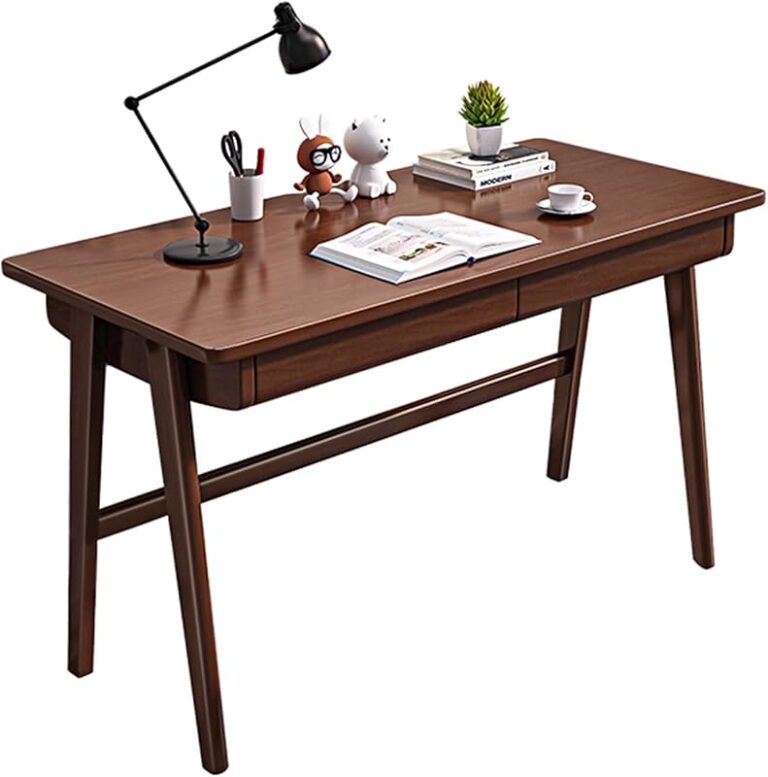
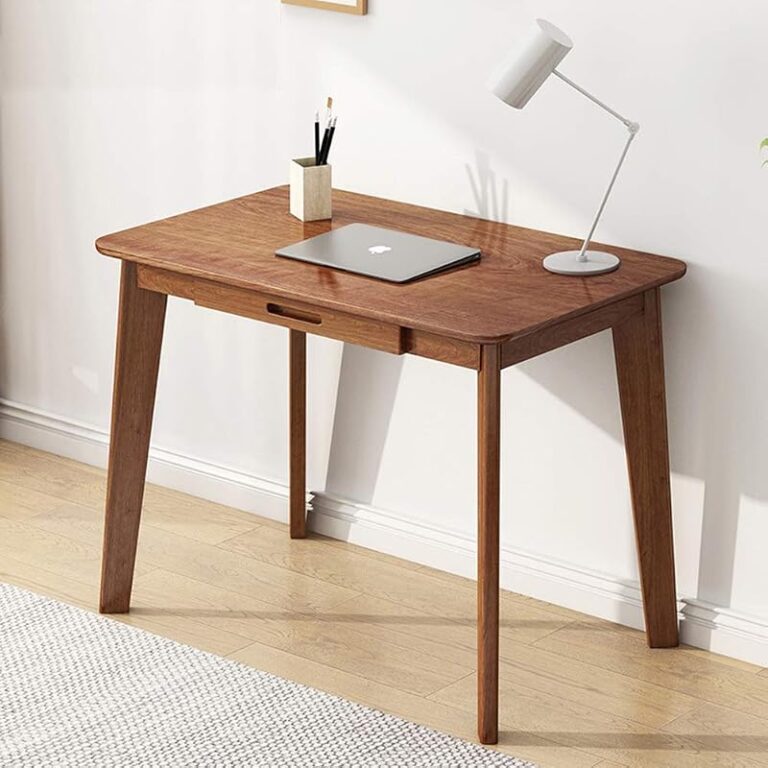
Angled drawing desk compared with a standard flat desk in a studio setting
A standard flat desk is versatile, but a drawing desk is built around visual work. The angled top helps keep paper, sketchbooks, tablets, or drafting tools in a more natural line of sight, which can reduce neck strain during longer sessions.
It also tends to create a more deliberate work zone. That matters for creatives who want a surface that feels different from a dining table, laptop desk, or catch-all home office station.
Improved Angle, Posture, and Long-Session Comfort
The biggest benefit is ergonomic. When you work on a slight tilt, you often lean less over the page, which can help your shoulders and upper back feel less compressed during long sessions.
The angle can also make it easier to judge proportions, trace lines, and see details without constantly hunching forward. That does not replace a good chair, proper lighting, or sensible breaks, but it can support a more comfortable setup.
If you are comparing models, check whether the tilt range is gradual enough for your work. A shallow angle may suit writing and sketching, while a steeper one is often better for drafting or illustration.
When a Flat Desk Is Still the Better Choice
A flat desk is often smarter if you split your time between creative work and computer work. It is also the better option if you need room for dual monitors, a laptop stand, notebooks, and office accessories all at once.
If you only sketch occasionally, a flat desk with a portable drawing board may give you most of the benefit without the space commitment. That is especially true in small apartments, shared rooms, or multipurpose offices.
For readers trying to decide between creative desk accessories and a dedicated surface, it may also help to compare the value of specialized tools more broadly, such as in our guide to are expensive art supplies worth it for hobbyists.
Who a Drawing Desk Is Best For in 2026
Drawing desks are not niche furniture anymore, but they still make the most sense for people whose work benefits from an inclined surface. In 2026, that includes traditional artists, hybrid creatives, students, and home-office users who want one area dedicated to visual work.
The key is matching the desk to the person, not the other way around. A beautiful desk that does not suit the workflow will end up feeling like wasted square footage.
Artists, Illustrators, Architects, Students, and Hybrid Home Office Users
Illustrators and sketch artists often benefit the most because they need to see the page clearly while keeping the drawing arm relaxed. Architects, design students, and pattern makers may also appreciate the drafting-friendly angle and the sense of order it brings to technical work.
Hybrid home-office users are a special case. If your desk has to handle both creative tasks and administrative work, look for a model that can tilt back toward flat or provide enough surface area to support both modes comfortably.
Model features vary widely by brand, finish, and size. Always confirm the official product listing and assembly details before buying, especially if you need built-in drawers, a pencil ledge, or a specific tilt mechanism.
Which Rooms and Workflows They Fit Best
Drawing desks work best in rooms where the desk can stay set up and undisturbed. A quiet corner office, studio nook, spare bedroom, or well-planned living room workspace is usually a better fit than a high-traffic family area.
They also suit workflows that involve repeated returns to the same surface: sketching in the morning, editing in the afternoon, and storing supplies nearby. If your routine is highly mobile, a lighter portable board or foldaway setup may be more practical.
For creative spaces that also display art or reference images, lighting matters too. If you are planning picture lighting alongside your workspace, our guide on are gallery picture lights worth it can help you think through placement and usefulness.
What to Look For Before You Buy
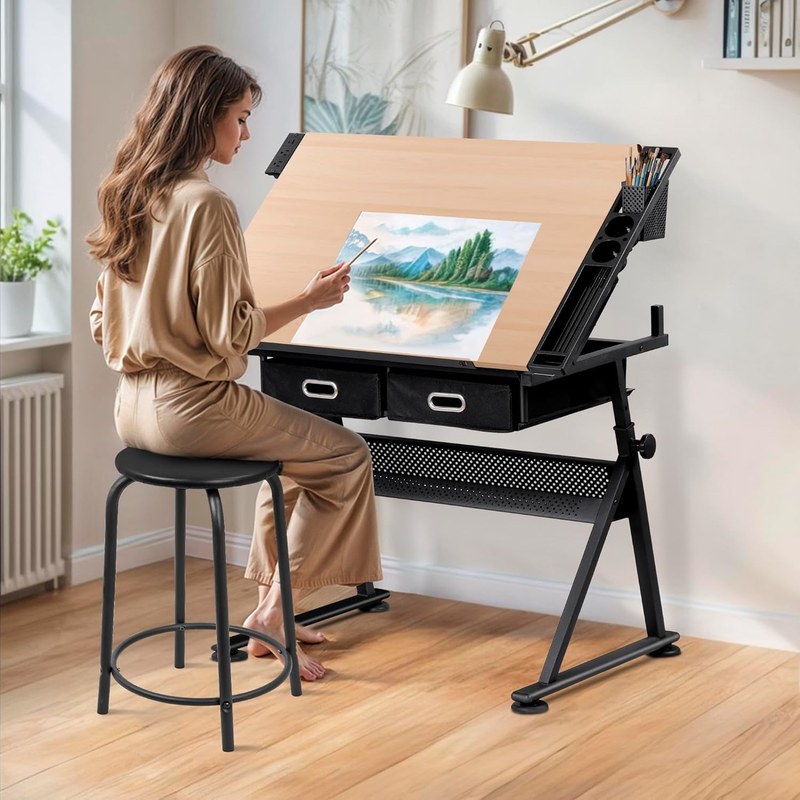
Adjustable drawing desk with tools laid out for an artist or designer.
The best drawing desk is not necessarily the most expensive or the most feature-packed. It is the one that balances stability, surface size, adjustability, and room fit without making the workspace feel crowded or awkward.
Before buying, compare the actual specifications rather than the lifestyle photos. Manufacturer claims about storage and tilt are helpful only if they match the way you plan to use the desk.
Key Materials, Stability, and Surface Size
Material choice affects both durability and feel. Solid wood, engineered wood, metal-framed models, and mixed-material desks all have trade-offs, and the right one depends on whether you value warmth, weight, portability, or a more industrial look.
Stability is especially important because a tilted surface changes how weight sits on the frame. If the desk wobbles, flexes, or shifts when you lean on it, the drawing experience becomes frustrating fast.
Surface size should reflect your actual tools. A sketchbook user may not need much more than a compact top, while someone using rulers, cutting mats, references, and a tablet may need a much wider work area.
Adjustability, Tilt Range, Storage, and Compatibility With Tools
Adjustability is one of the main reasons to choose a drawing desk over a standard desk. Check how easy the tilt mechanism is to move, whether it locks securely, and whether it can hold the angle you want without slipping.
Storage also matters, but not all storage is useful. Shallow drawers, side trays, and pencil ledges can be helpful for frequently used tools, yet bulky storage can make the desk feel heavier and less elegant in a small room.
Compatibility with tools is another practical detail. If you use a drafting lamp, tablet, cutting mat, or large-format paper, make sure the desk surface and angle will not interfere with those items.
- Confirm the tilt range and locking mechanism suit your work style
- Measure the surface against your largest sketchbook, tablet, or paper size
- Check whether storage reduces legroom or usable surface area
- Review the official assembly instructions and care guidance
Build Quality, Weight, and Ease of Assembly
Build quality is where many buyers make the wrong compromise. A desk that looks refined online but feels flimsy in person can create more problems than it solves, especially if you plan to use it daily.
Weight can be a benefit or a drawback. Heavier desks usually feel steadier, but they are harder to move through narrow hallways, upstairs rooms, or rentals with limited layout flexibility.
Assembly also deserves attention. If the desk has moving parts, adjustable hardware, or multiple panels, check whether the setup is realistic for one person and whether replacement parts are available if needed.
Drawing Desk Sizes, Placement, and Room Styling
Size and placement influence whether a drawing desk feels like a natural part of the room or an oversized object that dominates it. Even a well-made desk can look awkward if it is too deep, too tall, or placed where movement is restricted.
This is where many home-office buyers should slow down and measure twice. A drawing desk has to work in daily life, not just in a product photo.
How to Choose the Right Footprint for Small, Medium, and Larger Rooms
In small rooms, a compact desk with a clean frame and modest storage usually works best. Leave enough clearance for your chair, your knees, and a comfortable path around the space.
In medium rooms, you can prioritize a wider surface or a more substantial base without making the room feel cramped. Larger rooms give you room to consider separate zones for drawing, computer work, and display.
The best footprint is the one that preserves circulation. If you have to squeeze sideways past the desk every day, it is probably too large for the room.
Where to Place It for Light, Movement, and Cable Management
Place the desk where natural light helps rather than creates glare. Side light is often easier to manage than direct front light, but the ideal setup depends on the room and whether you are right- or left-handed.
Movement matters too. You want enough room to pull out the chair, set down supplies, and shift posture without bumping into furniture. If the desk will hold a tablet, lamp, or charger, plan cable routes so cords do not cross your working area.
For heavier desks, adjustable lighting, or wall-adjacent setups, always check wall type, floor level, and weight limits before making structural changes. If anything needs secure mounting, use the manufacturer’s instructions or a qualified installer.
How to Style It to Suit a Modern, Creative Home Office
A drawing desk can look polished without feeling sterile. Pair it with a task lamp, a practical chair, and a few well-chosen tools so the space feels intentional rather than cluttered.
Neutral finishes work well in modern home offices, while warmer woods can soften a studio corner. If your room already has framed art, shelves, or reference books, echo those tones in small ways rather than trying to match everything exactly.
- Keep the desktop visually light by storing only daily-use tools on top
- Use one or two decorative objects, not many small distractions
- Repeat one finish, such as black metal or light oak, elsewhere in the room
- Add a task lamp that supports the desk without crowding the angled surface
Benefits and Limitations: The Real-World Trade-Offs
The value of a drawing desk comes down to how much it improves the workday relative to the space and money it requires. For some users, it becomes the most useful piece of furniture in the room. For others, it is an attractive but unnecessary specialty item.
Being honest about the trade-offs makes the purchase easier to judge. A good drawing desk solves specific problems; it does not magically improve every creative workflow.
Productivity, Ergonomics, and Creative Focus
When the angle, height, and layout are right, many users find it easier to settle into focused work. A dedicated drawing surface can reduce setup friction because the desk already supports the kind of work you plan to do.
That sense of purpose can also help with creative momentum. If your desk feels like a drafting station instead of a random table, you may be more likely to sit down and start.
For many artists, the ergonomic benefit is the most persuasive part. Less neck strain and better page visibility can make long sessions feel more sustainable, especially when combined with a supportive chair and good lighting.
Cost, Space, and Multi-Purpose Use Limitations
The main downsides are cost and flexibility. A drawing desk usually takes up more room than a simple writing desk, and some models cannot adapt easily to other tasks.
If you need a single surface for work calls, laptop use, paperwork, and creative projects, a highly specialized desk may feel restrictive. In that case, a more versatile desk plus a separate drawing board may be the better investment.
- Supports angled drawing and drafting work
- Can improve comfort during long sessions
- Creates a more focused creative zone
- Takes more space than a flat desk
- May be less flexible for general office tasks
- Quality and stability vary widely by model
Common Mistakes People Make When Buying a Drawing Desk
Most regrets come from overlooking the practical details. Buyers often focus on appearance first, then discover that the desk is too tall, too shallow, or too unstable for real use.
These mistakes are avoidable if you measure your room and think through your daily workflow before checkout.
Choosing Style Over Stability
A sleek frame or sculptural base can be appealing, but style should never outrank steadiness. An attractive desk that shifts when you press down on the surface will quickly become annoying.
Look for clear information about frame construction, leg design, and tilt support. If those details are vague, that is a sign to verify the specifications carefully before buying.
Ignoring Chair Height, Lighting, and Storage Needs
The desk is only one part of the setup. If your chair sits too low or too high, the ergonomic benefit of the angled top can disappear.
Lighting matters just as much. A well-placed task lamp or natural light source can make the desk far more effective, while poor light can make even a premium setup feel frustrating. Storage also matters if you want to keep pencils, rulers, erasers, or tablets within reach.
If you are still building out the creative side of the room, it may help to think about supporting tools as carefully as the desk itself, similar to how artists weigh the value of supplies in our guide to are art supplies good gifts for artists.
Overbuying Features You Will Not Use
Some desks come with drawers, shelves, adjustable hardware, and extra accessories that sound useful but may not match your habits. More features can mean more weight, more assembly, and more visual clutter.
Buy for the way you work now, not for an imaginary workflow you may never adopt. If you only need a stable angled surface and a place for a lamp, a simpler model may serve you better.
Care, Maintenance, and Final Verdict
Drawing desks are usually straightforward to maintain, but the moving parts and surface finish deserve regular attention. A little care helps preserve both the appearance and the function of the desk over time.
If you choose well, the desk should support your creative routine for years rather than becoming another piece of furniture you work around.
Cleaning, Adjustments, and Long-Term Value
Use care instructions from the manufacturer for the finish, especially if the desk has wood veneer, laminate, or coated metal parts. In general, keeping the surface free of dust, graphite residue, and spilled liquids will help it age better.
Check screws, hinges, and tilt locks periodically so the desk stays steady. If the desk is adjustable, occasional re-tightening may be part of normal ownership.
Long-term value is strongest when the desk remains relevant after the novelty fades. A well-sized, stable model with the right tilt can stay useful through sketching, drafting, planning, and light office work.
Transparent Recommendation: When a Drawing Desk Is Worth It and When It Is Not
A drawing desk is worth it if you regularly create on paper or with tools that benefit from an angled surface, you have enough room for a dedicated setup, and you care about comfort during longer sessions. It is especially worthwhile for artists, illustrators, architecture students, and hybrid creatives who want their workspace to support visual work more naturally.
It is not worth it if your space is tight, your work is mostly laptop-based, or you need one desk to do everything. In that case, a flat desk with a portable drawing board may be the more flexible and cost-conscious solution.
For most buyers, the smartest choice is a stable mid-sized drawing desk with moderate tilt, simple storage, and a finish that suits the room. That balance usually fits modern home offices best, while oversized feature-heavy models are easier to regret.
Frequently Asked Questions