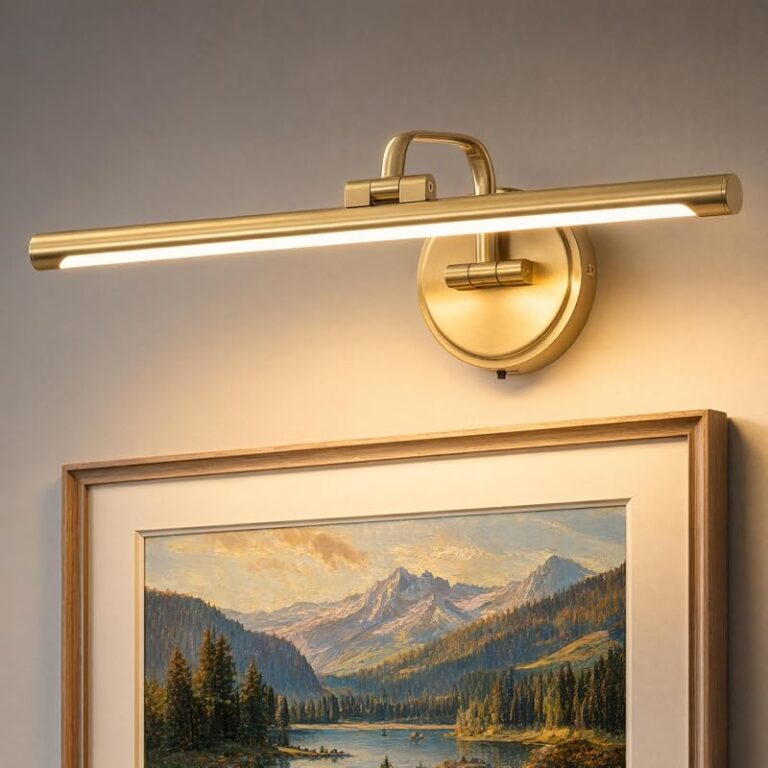
How Long Does It Take to Charge a Picture Light

Most rechargeable picture lights take about 2 to 6 hours to charge fully. Smaller models charge faster, while larger or brighter lights often take longer and may still need more frequent recharging if used at high brightness.
How long does it take to charge a picture light? In most cases, a rechargeable picture light needs about 2 to 6 hours to reach a full charge, but the real answer depends on battery size, charging port, brightness settings, and the type of light you choose. If you are comparing models for framed art, family photos, or a rental-friendly gallery wall, it helps to look beyond the charging claim and understand how that charge translates into everyday runtime.
- Typical range: Most picture lights charge in roughly 2 to 6 hours.
- Main factor: Bigger batteries usually mean longer runtime and longer charging time.
- Specs matter: Check mAh, lumens, dimming, timer modes, and USB port type together.
- Real-world use: Full brightness drains batteries much faster than medium settings.
- Best fit: Rechargeable models work especially well for renters, older homes, and walls without nearby outlets.
How Long Does It Take to Charge a Picture Light? The Short Answer
Most battery-operated picture lights sit in a fairly predictable range. Small lights with modest batteries may charge in around 2 to 3 hours, while larger lights with higher-capacity batteries often need 4 to 6 hours. Some premium models can take longer, especially if they offer stronger output, wider coverage, or multiple color temperature modes.
That headline number matters, but it is only half the story. A picture light that charges quickly but runs for only a few evenings at full brightness may be less convenient than one that takes longer to recharge but lasts much longer between charges.
Typical charging times by battery size and USB type
Charging time usually follows battery capacity. A compact picture light with a smaller internal battery may top up quickly over USB-C, while a longer bar-style light with a larger battery pack often takes more time. In general, USB-C models tend to be more convenient than older Micro-USB versions because the connection is easier to use and many newer models support better charging input.
That said, the port shape alone does not guarantee faster charging. A USB-C light can still charge slowly if the manufacturer limits input, includes a low-output cable, or recommends a basic adapter. The product listing or manual should tell you the charging time range and, ideally, the supported input.
| Picture light type | Typical charge time | What to expect |
|---|---|---|
| Small rechargeable accent light | About 2-3 hours | Best for smaller frames or occasional evening use |
| Mid-size battery picture light | About 3-5 hours | A common balance of runtime and convenience |
| Large or high-output rechargeable light | About 4-6+ hours | Often better for wider art, but slower to refill |
| Plug-in picture light | No battery charging required | Steady power, but less flexible placement |
What “fully charged” usually means in real-world use
“Fully charged” does not always mean “maximum runtime under every setting.” Many manufacturers base runtime on lower or medium brightness rather than the brightest mode. If a light has dimming steps, warm and neutral color options, or an auto-off timer, battery life may vary quite a bit from the headline claim.
For real homes, fully charged usually means the light is ready for a normal cycle of evening use rather than continuous all-night illumination. If you plan to switch it on for a few hours at a time, a rechargeable model can be very practical. If you want it glowing every night for long stretches, charging frequency becomes a much bigger part of the buying decision.
What Affects Picture Light Charging Time Most in 2026
By 2026, rechargeable picture lights are easier to find and generally more polished than older cordless options, but the same core factors still determine how long charging takes.
Battery capacity, charging input, and cable quality
The biggest factor is battery capacity, usually listed in mAh. A higher mAh rating often means longer runtime, but it also usually means a longer charge. Charging input matters too. If one model accepts a stronger input than another, it may refill faster even with a similar battery size.
Cable quality is often overlooked. A worn, low-quality, or incompatible cable can slow charging or make it inconsistent. If a manufacturer includes a cable, it is usually wise to start there and then confirm in the manual whether other cables and wall adapters are suitable.
If you are still narrowing down options, our guide on how to choose a picture light for artwork can help you compare charging convenience with size, finish, and light output.
LED brightness settings, colour temperature, and runtime expectations
Brightness settings affect how often you need to recharge, even if they do not directly change the speed of one charging session. A light used at full brightness every evening will cycle through its battery faster than the same light used on a lower setting.
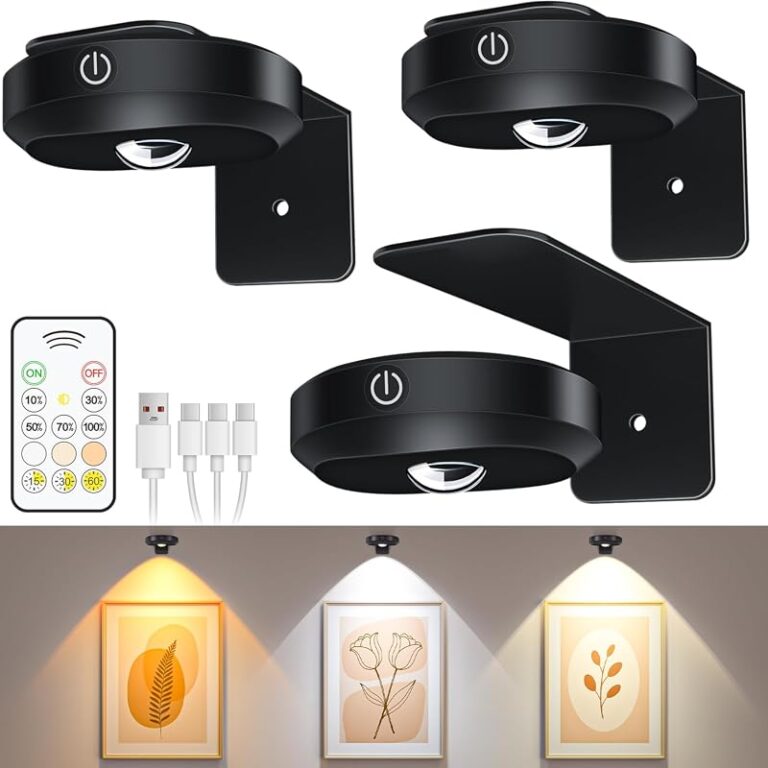
Color temperature can matter too. Some multi-mode lights offer warm, neutral, and cool-toned options, and power draw may differ by mode depending on the LED design. The effect is often modest, but over time it can influence how frequently you need to plug the light in.
For artwork, more brightness is not always better. A softly lit print in a hallway may need only a gentle wash of light, while a darker oil painting in a living room may benefit from stronger output. The right choice depends on the room, wall color, frame finish, and ambient light already in the space.
Why magnetic, rechargeable, and plug-in models perform differently
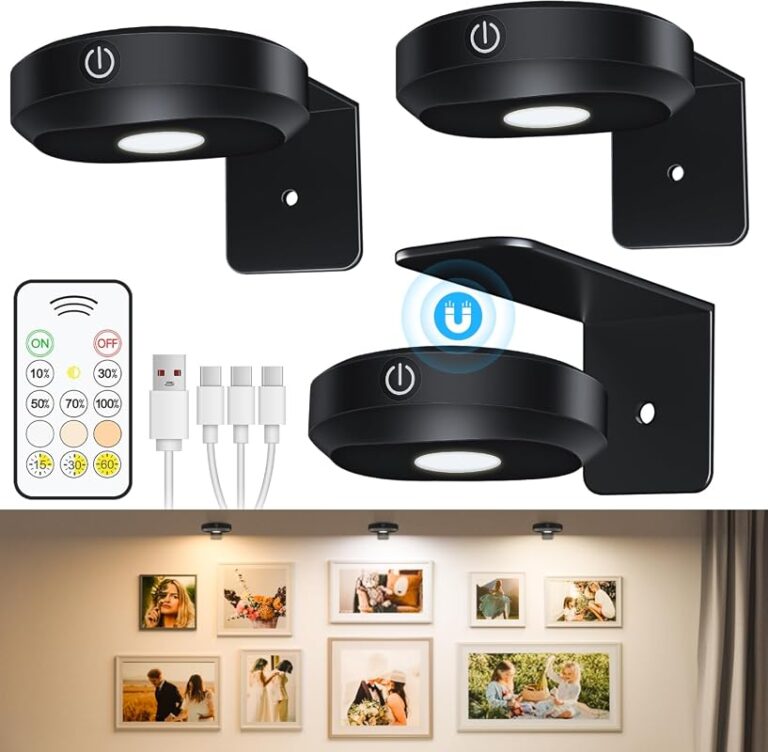
Magnetic rechargeable lights are often designed for convenience first. They can be removed from their mount for charging, which is especially appealing for renters or anyone who does not want visible wires. That convenience can make a slightly longer charge time feel less inconvenient in practice.
Standard rechargeable wall-mounted models may look more like traditional picture lights and can offer a cleaner finished appearance, but access for charging varies by design. Some detach easily; others require more careful handling.
Plug-in models avoid charging delays entirely, but they introduce cord management and outlet placement into the design equation. In some rooms, that tradeoff is worth it. In others, a battery model simply looks cleaner.
If a product page mentions runtime but not charging time, check the manual or manufacturer support page before buying. Those two details should be read together, not separately.
How to Read the Specifications Before You Buy
Specifications are where marketing language either becomes useful or starts to blur. A good listing should tell you enough to judge whether the light will suit your art, your room, and your charging habits.
Battery mAh, wattage, lumen output, and charging port type
Battery capacity, usually shown in mAh, gives a rough sense of endurance. Wattage helps indicate power draw, while lumen output tells you more about brightness. None of these figures should be read in isolation. A higher-lumen light may be ideal for a large framed piece, but it can also drain the battery faster if used at full strength.
The charging port type is worth checking closely. USB-C is now common and generally more convenient, while older Micro-USB models still appear in budget ranges. If you want easier day-to-day charging, the port type can matter almost as much as the battery itself.
Dimmable settings, timer modes, and remote-control features
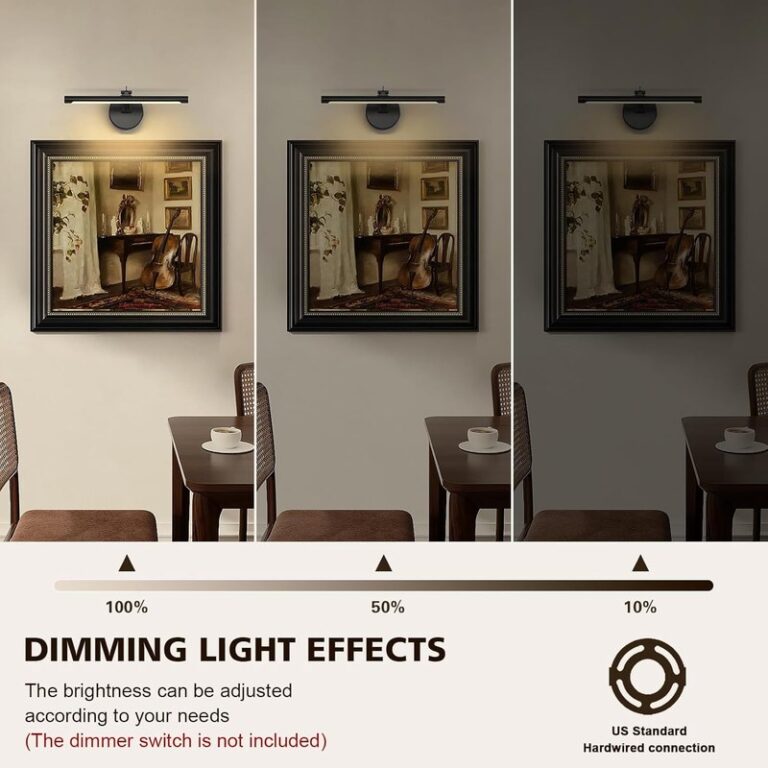
Dimming is one of the most useful features in a rechargeable picture light because it helps you balance mood, visibility, and battery life. Timer modes are equally practical. If the light turns itself off after a set period, it can stretch runtime significantly and reduce the need for frequent charging.
Remote controls are convenient, especially for lights mounted above larger frames or in stairwells and hallways. Just keep in mind that extra convenience features do not automatically mean better performance. What matters most is whether the controls are simple enough that you will actually use them.
- Check both charging time and runtime, not just one headline number.
- Confirm battery capacity, lumen output, and charging port type.
- Look for dimming and timer modes if you want fewer recharges.
- Verify what mounting hardware is included and whether it suits your wall type.
- Review the official care instructions and warranty terms before ordering.
Safety basics: overcharging protection, heat, and certified components
For battery-operated lighting, safety basics matter. Look for models that mention overcharge protection or similar battery-management features, especially if the product is intended for frequent charging. It is also wise to confirm that the charging cable and adapter recommendations are clear.
A little warmth during charging can be normal, but noticeable heat should not be ignored. Follow the manufacturer’s instructions, charge on a suitable surface, and avoid improvising with unsupported power accessories. If anything about a light’s charging behavior seems unusual, stop using it and contact the seller or manufacturer.
Do not assume every wall charger is interchangeable. Use the recommended charging setup and check the official instructions if the model has specific voltage or adapter limits.
Choosing the Right Picture Light for Your Art and Room
The right picture light is not only about battery life. It also needs to suit the artwork, the scale of the wall, and the way the room is used.
Best fits for hallways, living rooms, bedrooms, and rental spaces
Hallways often benefit from slim, rechargeable lights with moderate brightness and timer modes, since they are usually used in shorter bursts. Living rooms can support slightly larger fixtures, especially if the art is a focal point and the room has layered evening lighting.
Bedrooms usually call for softer output and warmer tones. Rental spaces often benefit most from magnetic or easy-to-remove designs that reduce commitment and simplify charging. If you are trying to avoid permanent changes, cordless options can be far easier to live with than plug-in or hardwired alternatives.
For renters who are also styling shelf displays, guides on how to hang a picture ledge without nails and how to style a picture ledge can help you build a flexible art setup around battery lighting.
Matching light width to frame size and artwork scale
A picture light should feel visually proportionate to the frame. As a general design rule, the light is often somewhat narrower than the artwork or frame width, though exact proportions vary by style. A very short light over a wide frame can look skimpy and create uneven coverage, while an oversized light can dominate the piece rather than complement it.
For large posters or oversized art, frame scale becomes especially important. If you are still planning the artwork itself, our article on how to frame a large poster is a useful companion read before choosing a light.
Warm vs neutral light for traditional, modern, and gallery-style interiors
Warm light usually feels softer and more residential. It tends to suit traditional interiors, antique frames, darker wall colors, and bedrooms. Neutral light often feels cleaner and more contemporary, which can work well for modern prints, pale walls, and gallery-style spaces.
Neither is universally better. The best choice depends on the artwork’s colors and the mood you want in the room. If a light offers adjustable color temperature, that flexibility can be worth paying for because it lets the fixture adapt if you move the art later.
- Choose a finish that relates to the frame or nearby hardware, not just the wall color.
- Use warm light for cozy, layered rooms and neutral light for cleaner, crisper displays.
- If the artwork has glass, dimmability matters as much as brightness because it helps reduce glare.
Placement, Sizing, and Brightness: Getting the Look Right
Even a well-made picture light can look disappointing if it is placed too high, too low, or too close to reflective glazing.
How high above the frame to mount a picture light
The ideal mounting height varies by fixture shape, beam spread, and frame depth, but picture lights are usually placed a short distance above the top of the frame so the beam can wash downward across the artwork. Too high, and the light may spill onto the wall; too low, and it may create a harsh hotspot at the top edge.
Because mounting systems differ, it is worth reviewing the manufacturer’s installation guidance before drilling or attaching anything. If the piece is valuable, oversized, or mounted on a difficult wall surface, a professional installer is the safer route.
Avoiding glare, hotspots, and uneven coverage
Glare is especially common when the artwork is glazed or hung opposite a window or lamp. Dimming helps, but so does placement. A light with a wider, softer spread will usually look more refined over glass-covered art than a narrow, intense beam.
Hotspots happen when the light is too strong for the size of the piece or aimed too directly at one area. Uneven coverage is more common when the light is too short for the frame width. The fix is usually not “more lumens,” but better proportion and better positioning.
Wall type, fixing method, and hardware considerations for safe installation
Installation needs vary by wall type, whether the light uses screws, adhesive backing, or a magnetic plate. Always confirm that the included hardware is suitable for your wall and the weight of the fixture. Painted drywall, plaster, masonry, tile, and paneling all behave differently.
If you are unsure about anchors, weight limits, or the condition of the wall, consult a qualified installer. Battery-operated lights are often lighter than hardwired fixtures, but they still need secure mounting, especially above framed art and in high-traffic areas.
Benefits and Limitations of Rechargeable Battery Operated Picture Lights
Rechargeable picture lights solve a real decor problem: how to add focused art lighting without opening walls, running cords across sightlines, or committing to a permanent electrical setup.
Why cordless lighting works well for period homes and awkward walls
Older homes, rental apartments, and rooms with tricky outlet placement often benefit most from cordless picture lights. They can bring emphasis to art in places where hardwiring would be expensive, visually disruptive, or simply impractical.
They are also useful on awkward walls where a cord would interrupt the look of the space. In decorative terms, that freedom is often the biggest advantage of all.
Where battery models fall short compared with hardwired options
The main limitation is consistency. A hardwired or plug-in picture light can provide steady illumination without downtime for charging. Battery models ask you to manage runtime, brightness, and recharging as part of normal ownership.
They can also be less ideal for very large artwork, long nightly use, or spaces where the light is expected to stay on for extended periods. If your priority is set-it-and-forget-it performance, rechargeable may not be the best fit.
- No visible cord in many setups
- Often easier for renters and older homes
- Flexible placement over art without nearby outlets
- Simple to remove for charging on magnetic designs
- Needs regular recharging
- Runtime varies widely by brightness setting
- May be less suitable for very large or heavily used displays
- Specifications can be vague on some listings
When a rechargeable picture light offers the best value
A rechargeable picture light often offers the best value when you want a cleaner look than a plug-in fixture, but you do not need all-night operation. It can also be a smart choice if you like to rotate art or move pieces between rooms, since the lighting setup can stay flexible.
The strongest value usually comes from a model with clear specs, dimming, a practical runtime, and a charging method that fits your routine. Convenience is part of the value equation, not a bonus feature.
Common Charging and Styling Mistakes to Avoid
Many disappointments with battery picture lights come from mismatched expectations rather than bad products.
Using the wrong charger, underestimating runtime, and poor placement
One common mistake is assuming any USB charger will do. Another is buying based on charging time alone without checking likely runtime at your preferred brightness. Poor placement adds a third problem: even a well-charged light can look underwhelming if it is mounted at the wrong height or used over art that is too wide for it.
Choosing brightness that overwhelms the artwork or surrounding decor
Picture lighting should support the art, not flatten it. A very bright light in a small room can pull attention away from the piece and make the whole wall feel overlit. This is especially true in bedrooms, reading corners, and layered living spaces where softer ambient lighting already exists.
Ignoring frame finish, wall colour, and existing ambient lighting
A brass-toned light over a cool chrome frame may feel visually disconnected, and a neutral-white beam on a warm, moody wall may look sharper than intended. Existing lamps, sconces, and daylight all affect how a picture light reads in the room.
Thinking about the whole composition usually leads to a better result than focusing on the light in isolation.
- Match the light’s output and width to the artwork.
- Check official charging and runtime specs before buying.
- Use dimming and timers to stretch battery life.
- Assuming a fast charge means long runtime.
- Mounting too high and creating wall glare.
- Choosing a finish or color temperature that clashes with the room.
Care, Maintenance, and Final Recommendation
A rechargeable picture light is easiest to live with when it is treated like part of your decor routine rather than an afterthought.
How to preserve battery health and charging performance over time
Follow the charging guidance in the manual, use the recommended accessories, and avoid leaving the light neglected for very long periods if it is stored away. Battery performance naturally changes over time, but careful charging habits can help preserve convenience and consistency.
If the light has removable magnetic mounting, detach it gently rather than pulling at an angle. That helps protect both the fixture and the mount.
Cleaning, storing, and recharging safely between uses
Dust the fixture with a soft dry cloth and keep charging ports clean and unobstructed. If the light is seasonal or used only occasionally, store it in a dry indoor place and recharge it according to the manufacturer’s storage guidance.
Avoid harsh sprays, soaking, or abrasive cloths, especially on painted, plated, or brushed finishes.
What to prioritise if you want a picture light that is easy to live with
If ease matters most, prioritize four things: clear charging specs, a sensible runtime at medium brightness, dimming or timer controls, and a mount that makes recharging simple. In practical terms, a good rechargeable picture light is not the one with the shortest advertised charge time. It is the one whose battery, brightness, and mounting design fit the way you actually use your room.
Before ordering, confirm the latest details on the official product listing, including charging time, runtime, included hardware, care guidance, and warranty terms, since these can vary by model and retailer.
Frequently Asked Questions