IKEA Standing Desk Hack Ideas for Small Home Offices

An ikea standing desk hack can give you a more stylish and customizable sit-stand setup than many standard office desks. The best results come from matching the right IKEA top to a compatible frame, then finishing it with smart cable management and restrained styling.
An ikea standing desk hack can be one of the smartest ways to get a sit-stand setup that looks more custom than off-the-shelf. The appeal is simple: IKEA tops, drawers, and accessories give you flexible design options, while an adjustable base lets you tailor the desk to your room, storage needs, and style.
For most home offices, the best approach is to start with the desktop first, then match it to a compatible frame with enough lifting capacity and width support. If you want the finished desk to feel elevated rather than improvised, focus on proportions, cable control, and materials that suit the rest of the room.
- Start with compatibility: Check desktop size, weight, and frame support before choosing a look.
- Style comes from the top: Wood, bamboo, or clean white surfaces shape the desk more than the base does.
- Stability matters: Standing-height wobble depends on the frame, floor, load, and installation quality.
- Keep it cohesive: Matching finishes, hidden cables, and modest accessories make the setup feel custom.
- Verify details: Confirm current specs, care guidance, and warranty terms on official product listings.
What makes an IKEA standing desk hack worth doing in 2026?
Why IKEA parts are still the go-to for a stylish sit-stand setup
IKEA remains a favorite source for desk hacks because the brand offers a wide mix of countertops, desk tops, drawer units, cable accessories, and storage pieces in finishes that are easy to style. That matters in a home office where the desk is often visible all day, especially in bedrooms, living spaces, and open-plan homes.
Another reason these hacks still work well is that many people no longer want bulky office furniture with a corporate look. Pairing a cleaner desktop with a separate sit-stand frame can create something warmer and more residential. A wood-look top, a slim black or white base, and restrained accessories often feel far more intentional than a standard office desk package.
When a hack looks custom rather than temporary
The difference usually comes down to finish and fit. A desk hack looks custom when the top is the right thickness for the base, the frame is centered properly, and any added drawers or shelves feel integrated rather than squeezed in as an afterthought.
Details matter too. Clean edge treatment, coordinated hardware, and hidden cables can make a budget-conscious setup look surprisingly polished. By contrast, mismatched colors, overhanging tops without enough support, or a tangle of cords underneath can make the desk feel unfinished.
If your goal is a more built-in feel, keep the overall palette tight. One wood tone, one metal finish, and one main accent color usually work better than trying to combine several trends at once.
What to look for before choosing an IKEA standing desk hack
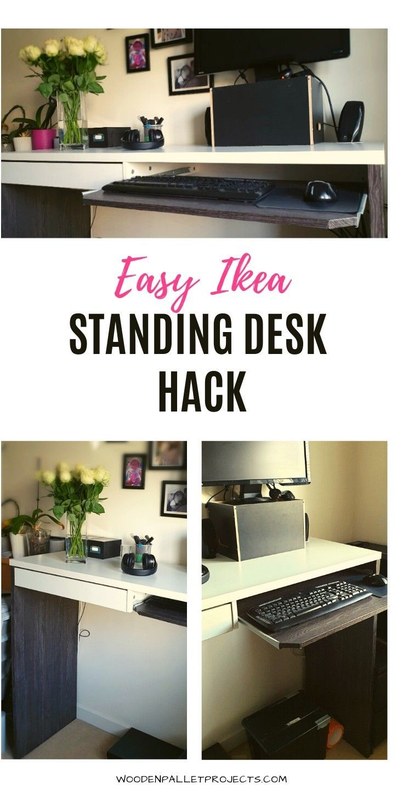
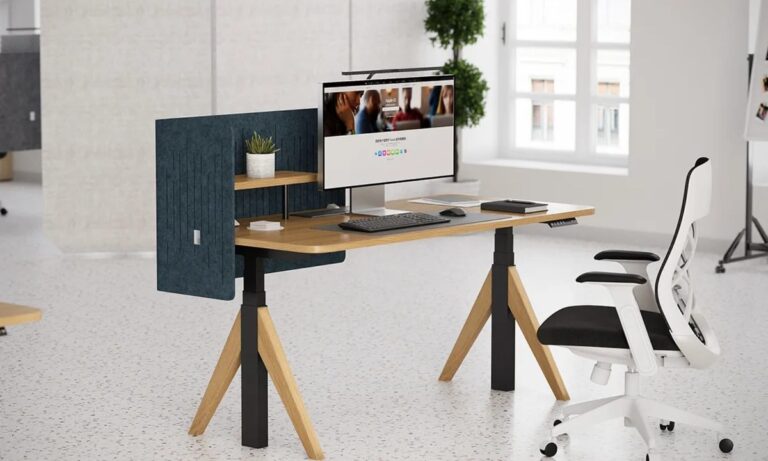
A home office desk setup highlighting frame, desktop, and monitor placement.
Desktop size, weight capacity, and frame compatibility
Before choosing any top, check the frame manufacturer’s recommended desktop width, depth, and weight range. This is one of the most important steps because not every adjustable base works well with every IKEA surface. Some tops are light and hollow-core, while others are much heavier and need stronger lifting columns and better support.
A deeper desktop can be great for dual monitors or creative work, but it also changes balance and may require a wider frame. Likewise, a longer top can look elegant, yet it may introduce more flex if the base is too narrow or the top is not well supported.
- Confirm the frame’s supported desktop width, depth, and maximum load.
- Check whether the IKEA top is hollow-core, particleboard, veneer, bamboo, or solid wood.
- Measure monitor arms, speakers, and storage units as part of the total load.
- Verify whether pre-drilling is needed and whether the frame hardware suits the top material.
Manual vs electric lift systems and stability at standing height
Manual standing desk systems can work for lighter-duty setups or occasional height changes, but most people who switch between sitting and standing throughout the day prefer electric frames. They are generally more convenient, especially if your desk supports monitors, a laptop stand, desk lighting, and accessories.
Stability matters just as much as lift type. A desk that feels fine when seated can wobble more at full standing height, particularly on uneven floors or plush rugs. Heavier tops, monitor arms, and off-center loads can make this more noticeable.
If you are planning a creative workstation, a dual-monitor desk, or a setup with drawing tools and peripherals, it is worth comparing frame specs carefully. Readers building art-friendly workstations may also find our guide to the best standing desk for artists useful when thinking about depth, surface area, and movement needs.
Materials, finishes, and durability for daily home office use
Material choice changes both the look and the long-term feel of the desk. Laminate and melamine surfaces are often easier to wipe down and tend to resist minor spills better, but they can look flatter or less premium depending on the finish. Veneer can look more refined, though it needs gentler care. Solid wood and bamboo bring warmth and texture, but they may need more attention around humidity, scratches, and surface protection.
For a stylish setup, the finish should also make sense with the rest of the room. A rich walnut-look top can add contrast in a pale room, while lighter oak or bamboo tones often suit Scandinavian, Japandi, and softer modern interiors.
Cable management, storage, and accessory add-ons
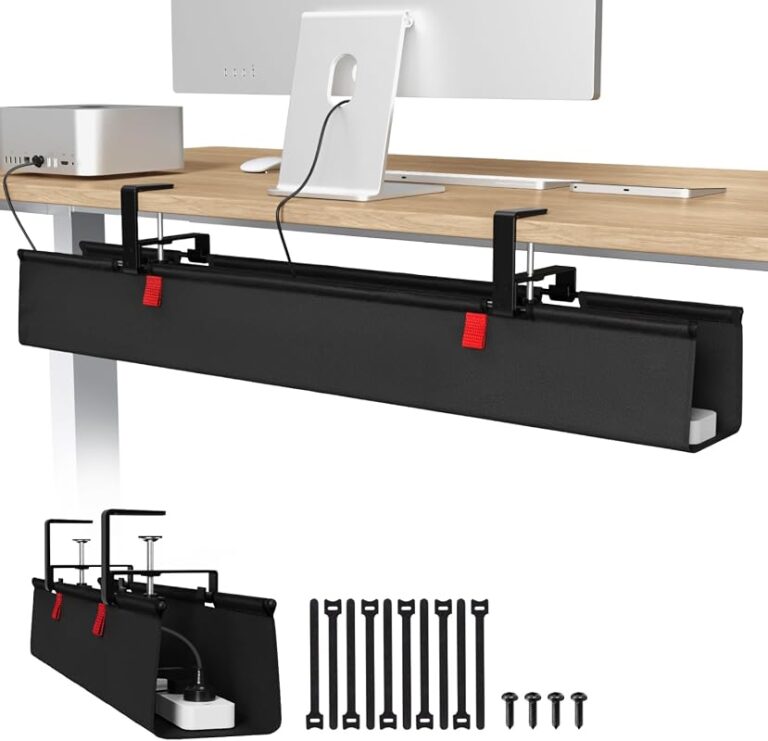
A standing desk is only as clean-looking as the cable plan underneath it. Height-adjustable desks move, so loose cords that look manageable at seated height can pull, sag, or snag when the desk rises. That is why cable trays, adhesive clips, under-desk baskets, and power strip mounting solutions are worth planning early.
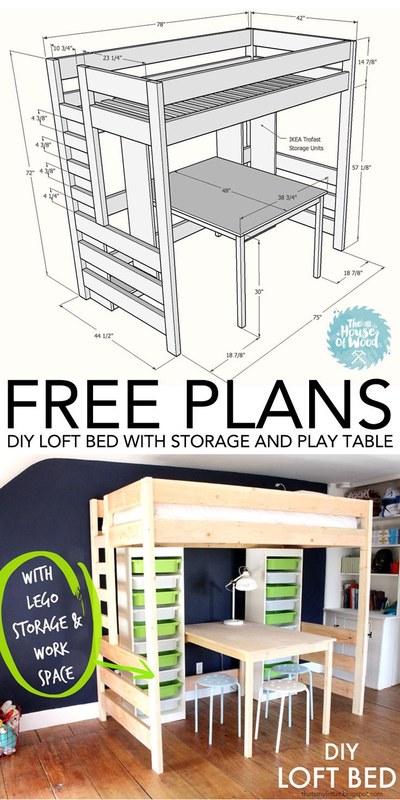
Storage is another part of the hack. Some people want only a clean top and one slim pedestal. Others need drawers, shelving, or printer storage. If that is your priority, our article on how to make a standing desk with storage goes deeper into balancing organization with legroom.
Mount as many cables and power components as possible to the underside of the desktop, not the wall. That way the whole system moves together when the desk changes height.
The best IKEA standing desk hack ideas for a stylish setup
KARLBY countertop with a sit-stand frame for a warm, designer look
The KARLBY route is popular for a reason: it gives a home office a fuller, more furniture-like presence than a basic office top. The thicker profile tends to look substantial, and the wood-inspired finish can soften the technical look of a metal frame.
This option often works best in medium to large rooms where the desk is a focal point. It suits warmer interiors, especially when paired with matte black hardware, a leather or upholstered chair, and a restrained monitor setup. The main caution is weight. Depending on the size and specific construction, some countertop-style tops can be significantly heavier than standard desk surfaces, so frame compatibility matters a great deal.
LAGKAPTEN or LINNMON top with budget-friendly adjustable legs or frame
If budget is the main concern, a lighter IKEA desk top can be the most accessible route. These tops are often easier to move, simpler to pair with entry-level adjustable systems, and practical for students, renters, or anyone furnishing a temporary office without wanting the result to look disposable.
The trade-off is that lighter tops may feel less substantial and may not be ideal for heavy clamping accessories or high loads. Still, with careful styling, they can look clean and modern. A white top with a white frame creates a bright minimal setup, while a darker frame can add definition.
Bamboo or light-wood desktop hacks for a softer Scandinavian feel
Bamboo and pale wood-look surfaces work especially well if you want the desk to blend into a calm, airy room. They tend to pair nicely with cream walls, soft gray textiles, black accents, and simple task lighting. This is one of the easiest ways to get a Scandinavian or Japandi-inspired workspace without making the room feel too office-like.
These lighter finishes are also forgiving in smaller spaces because they reflect more light visually and feel less heavy than dark tops. If your room already includes oak shelving, ash flooring, or natural woven textures, a pale desktop can tie everything together.
Compact IKEA standing desk hacks for small apartments and box rooms
Not every standing desk needs to be oversized. In smaller rooms, a compact IKEA hack can be the better design choice because it preserves walking space and prevents the desk from dominating the room. A narrower top with a slim frame often works well in alcoves, corners, guest rooms, or bedroom offices.
When space is tight, prioritize depth as much as width. A desk that is too shallow can feel cramped for monitors and keyboard use, but one that is too deep may push the chair too far into the room. If you are comparing smaller workstation formats more broadly, our guide to the best small desk with storage can help narrow down practical dimensions and layouts.
Double-duty setups with drawers, shelving, or monitor risers
Some of the best hacks combine a sit-stand base with nearby IKEA storage rather than trying to force everything under the desk itself. A separate drawer unit, low shelf, or matching monitor riser can create a more composed setup while keeping the desk surface usable.
This approach is especially effective for hybrid rooms. In a bedroom office or living area, surrounding the desk with coordinated storage can help it feel like part of the furniture plan rather than a standalone workstation. Just make sure any under-desk additions do not interfere with frame movement or knee clearance.
Which IKEA standing desk hack fits your room, layout, and work style?
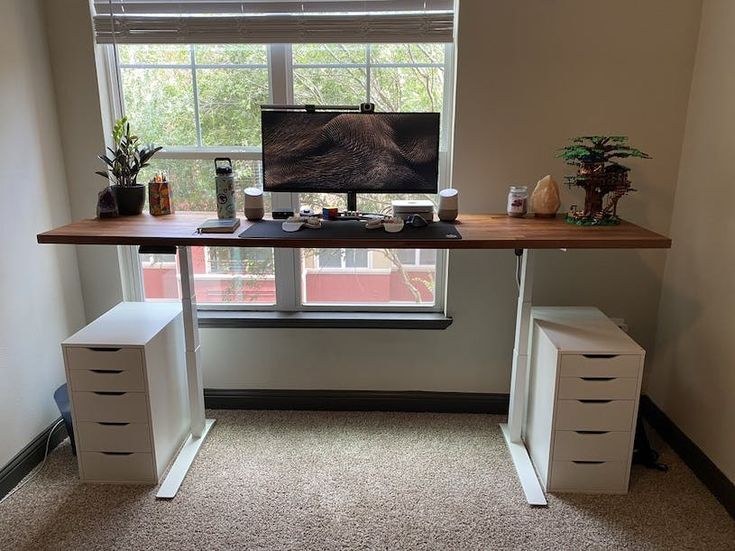
A compact IKEA standing desk setup in a neatly organized home office.
Best options for small home offices, bedrooms, and open-plan living spaces
In a dedicated office, you can usually prioritize function first: more width, more depth, and perhaps a heavier top. In a bedroom, visual quiet often matters more. Lighter finishes, slimmer frames, and fewer accessories tend to help the desk fade into the room when work is done.
Open-plan spaces benefit from desks that read more like furniture than equipment. That often means warmer materials, coordinated storage, and fewer exposed cables. A countertop-style top or bamboo surface usually looks more residential than a basic office laminate.
How to choose the right width, depth, and standing clearance
The best width depends on what lives on the desk. A laptop-only setup can stay compact, while dual monitors, speakers, or drawing tools need more room. Depth matters for viewing distance and comfort. If the monitor sits too close because the top is too shallow, the desk may never feel right no matter how nice it looks.
Standing clearance is easy to overlook. Make sure the frame can rise high enough for your height and working posture, and leave enough open space around the desk for a standing mat if you plan to use one. Also think about chair tuck-in depth and whether nearby storage blocks movement.
Placement tips for windows, outlets, rugs, and walking flow
Desk placement affects both comfort and appearance. Near a window can be ideal for natural light, but screen glare may require monitor repositioning or window treatments. Positioning the desk near outlets can simplify cable routing and reduce visible extension cords.
Rugs can make a setup feel finished, but thick pile can amplify wobble or make chair movement awkward. In narrow rooms, leave enough clearance behind the chair and along the main walking path so the desk does not interrupt circulation.
- Place the desk so the standing position does not block a doorway or main route through the room.
- Use a low-profile rug or keep the frame directly on hard flooring for better stability.
- Let daylight hit the desk from the side rather than directly behind the monitor when possible.
How to style an IKEA standing desk hack so it feels elevated
Matching wood tones, frame colours, and hardware finishes
A stylish desk hack usually relies on restraint. If the top has visible grain or warmth, repeat that tone elsewhere in small ways, such as a monitor riser, shelf, tray, or picture frame. Frame color should either disappear into the room or provide deliberate contrast.
Black frames look crisp and architectural. White frames feel lighter and often work well in bright, minimal rooms. Brushed metal or mixed finishes can work too, but they need a clear connection to other hardware in the space.
Layering task lighting, desk chairs, and storage without visual clutter
Lighting and seating can upgrade the whole desk area faster than another accessory can. A clean task lamp, a supportive chair with a refined silhouette, and one well-chosen storage piece usually look better than filling every surface. If you are refining the lighting side of the setup, our guide to the best desk lamp for artists includes ideas that also translate well to stylish home offices.
Try to vary heights across the desk zone: monitor, lamp, plant, and storage should not all sit at the same level. That gives the setup more depth without making it feel crowded.
Decor accents that work: art, plants, trays, and desktop textiles
The best accents are useful as well as decorative. A tray can corral small items. A plant can soften the lines of a monitor. A desk pad can add texture while protecting the surface. Framed art above or beside the desk helps the workstation feel integrated into the room’s decor language.
Keep the scale in check. One medium plant and one tray will usually do more for the look than many tiny objects scattered across the top. The goal is a desk that still feels usable at standing height, not a styled shelf that happens to have a keyboard on it.
Minimalist, Japandi, industrial, and modern classic styling directions
Minimalist setups benefit from white, black, or pale oak surfaces with concealed storage and very few visible accessories. Japandi spaces lean into warm light wood, matte black details, soft neutral textiles, and calm negative space.
Industrial versions look strongest with darker wood tones, black frames, and pared-back metal accessories. Modern classic rooms can handle richer woods, framed art, brass-toned accents, and a more furniture-like chair. The best choice is the one that matches the rest of the home, not just the desk trend of the moment.
The benefits and limitations of an IKEA standing desk hack
Where hacks can outperform ready-made desks on looks and value
A good IKEA hack can outperform many ready-made standing desks on visual appeal because you are not locked into a single manufacturer’s top, finish, or storage design. That flexibility is a major advantage if you want the desk to feel curated and residential.
Value can also be strong when you already know what matters to you. If the frame is solid and the top suits your room, you can often direct the budget toward the elements that actually affect daily satisfaction, such as size, material, and storage.
Common trade-offs in wobble, finish quality, and assembly time
The downside is that a hack is only as good as its weakest part. A beautiful top on an underpowered base may look great and perform poorly. A budget top may save money but feel less durable over time. Assembly can also take longer because you are effectively combining parts from different systems.
- More control over finish, size, and overall style
- Can look more custom than many standard office desks
- Flexible storage and accessory options
- Compatibility checks take more effort
- Stability varies by frame, load, and floor surface
- Some tops need more careful drilling and support
Evidence limits: what depends on frame brand, load, and installation quality
It is important not to overgeneralize. Performance depends heavily on the exact frame brand, the total weight on the desk, how the top is mounted, and whether the floor is level. Even the same desktop can behave differently depending on monitor arms, speaker placement, or how much weight sits toward the back edge.
That is why it is worth checking the official product listing, assembly guidance, care instructions, and warranty terms for both the top and the frame before buying. Small specification details can make a big difference in how successful the final desk feels.
Common mistakes that can ruin the look or performance
Choosing a top that is too heavy, thin, or unsupported
One of the biggest mistakes is picking a desktop based only on appearance. If the top is too heavy for the frame, too thin for secure mounting, or too long for the base width, the desk may feel unstable or wear poorly over time.
Ignoring edge treatment, pre-drilling, and weight distribution
Small build details affect the finished look more than many people expect. Rough edges, poorly placed screws, or uneven overhangs can make the desk feel improvised. Weight distribution matters too, especially with dual monitors or heavy accessories clustered at one end.
Over-accessorising the desktop and neglecting cable planning
Too many decor items can make a standing desk less functional because every height adjustment introduces movement and visual distraction. Cables are the other common issue. If they are not planned early, they can quickly become the messiest part of the setup.
Missing ergonomic basics for monitor height, keyboard position, and mat use
Even a beautiful desk can be uncomfortable if the monitor sits too low, the keyboard height is awkward, or the standing position is too rigid. Ergonomics do not need to look clinical, but they do need to be part of the plan.
- Measure the room, the desktop, and your equipment before ordering.
- Center the frame carefully and account for monitor arm placement.
- Leave enough clear floor space for both sitting and standing use.
- Assuming any IKEA top will work with any adjustable frame.
- Clamping heavy accessories to lightweight or hollow-core edges without checking suitability.
- Adding storage that blocks legroom or frame movement.
Care, maintenance, and long-term value
How to protect laminate, veneer, solid wood, and bamboo surfaces
Different surfaces need different care. Laminate and melamine are generally straightforward to wipe clean, while veneer needs a gentler touch to avoid wear at edges or corners. Solid wood and bamboo benefit from protection against moisture, heat, and abrasion, especially in rooms with changing humidity or strong sunlight.
Always check the official care guidance for your exact IKEA top and frame. Surface tolerance, finish sensitivity, and maintenance needs vary by material and construction.
Cleaning routines, scratch prevention, and humidity considerations
A soft cloth, quick spill cleanup, and a desk pad for high-contact areas go a long way. Avoid dragging metal accessories across the surface, and use coasters if drinks regularly sit on the desk. In drier or more humid rooms, natural materials may react more than laminate surfaces do.
If the desk sits near a sunny window, keep in mind that some finishes can show fading or uneven aging over time. Rotating accessories occasionally can help avoid obvious shadow marks on light-sensitive surfaces.
When an IKEA hack offers better value than a premium branded standing desk
An IKEA-based setup often offers better value when style flexibility matters as much as function. If you want a specific wood look, need a size that suits an awkward room, or prefer to build around existing storage, a hack can make more sense than buying a one-size-fits-all desk package.
Premium branded desks may still be the better choice if you want one-source warranty coverage, simpler assembly, or more confidence in a fully integrated system. The right answer depends on whether you value customization or convenience more.
Final recommendation: the most stylish and practical IKEA standing desk hack routes
For most readers, the strongest route is a medium-weight, good-looking IKEA top paired with a well-reviewed electric frame that clearly supports the size and load you need. If you want the most elevated look, a warmer wood or bamboo-style surface with disciplined cable management usually strikes the best balance between style and practicality.
If your priority is affordability, a lighter IKEA top can still work well as long as you keep accessories modest and verify compatibility carefully. In either case, the most successful desk hacks are the ones designed as complete room pieces, not just adjustable bases with a board on top.
Frequently Asked Questions