Best Frames for Acrylic Paintings and Canvas Art

The best frames for acrylic paintings usually balance protection, proportion, and style rather than trying to steal attention from the artwork. Floating frames, slim wood profiles, and minimal black finishes are the most versatile choices for modern homes.
Frames for acrylic paintings do more than finish an artwork—they shape how it reads in a room. The right frame can sharpen color, calm a busy composition, and give even a simple canvas a more collected, intentional presence.
- Floating frames: Best for a clean gallery-style finish.
- Wood frames: Add warmth to contemporary interiors.
- Black or metal frames: Create sharp contrast for modern spaces.
- Scale matters: Small works need presence; large canvases need restraint.
- Care counts: Keep acrylic art away from heat, humidity, and strong sun.
Frames for Acrylic Paintings: Why Framing Changes the Viewing Experience
Acrylic paintings often have a bright, direct visual energy. Because acrylic dries with crisp edges and strong color, the frame becomes part of the experience rather than a separate accessory.
In a home, framing can make an acrylic work feel more polished, more architectural, or more relaxed depending on the material and profile you choose. For a broader canvas context, our guide to frames for canvas paintings is a useful companion read.
How acrylic surfaces interact with light, color saturation, and room decor
Acrylic paint tends to hold color with clarity, which means the frame must either echo that energy or gently balance it. In bright rooms, glossy finishes and reflective surfaces can amplify the artwork, while matte frames keep the look quieter and more grounded.
Room decor matters too. A warm wood frame can soften a minimal interior, while black or metal framing can give color-rich acrylics a sharper, gallery-like edge. The best choice depends on whether you want the painting to blend into the home or stand out as a focal point.
Reader intent: choosing a frame that protects, elevates, or modernizes the artwork
Most people searching for frames for acrylic paintings are trying to solve one of three problems: protecting the piece, elevating a room, or giving the artwork a more modern finish. Those goals overlap, but they do not always lead to the same frame.
If the painting is a gift or a newer purchase, a frame that feels clean and versatile is often the safest route. If it is a statement piece, a more deliberate choice—such as a floating frame or a bold black border—can make it feel complete.
Best Frame Styles for Acrylic Paintings in 2026 Interiors
Interior trends in 2026 continue to favor calm materials, clear lines, and art that feels integrated rather than overly staged. That makes frame choice especially important for acrylics, which can look either crisp and contemporary or slightly unfinished depending on presentation.
Floating frames for gallery-style presentation
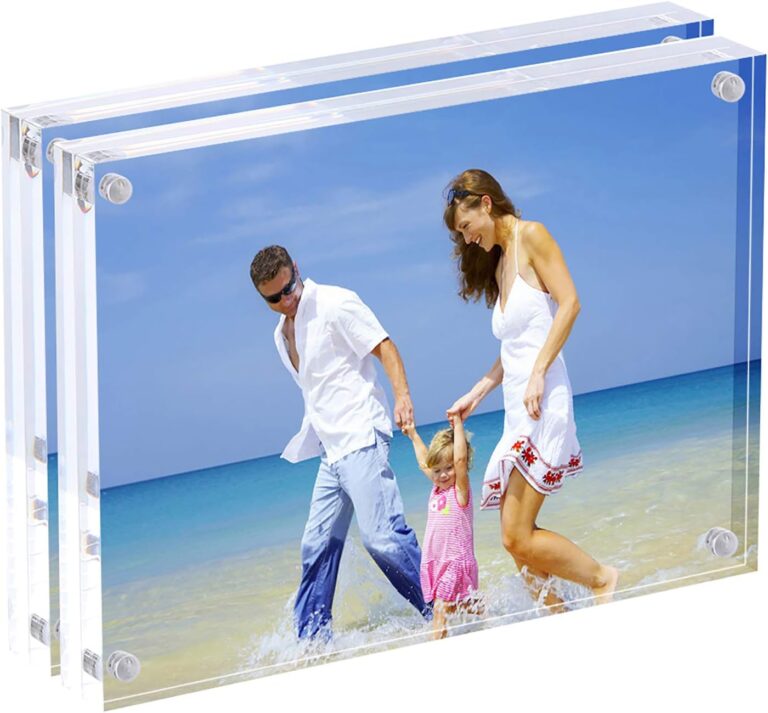
Floating frames remain one of the most elegant choices for acrylic paintings on canvas. They create a slim visual border that makes the artwork appear to hover, which suits modern interiors and collectors who prefer a gallery-style finish.
This style is especially effective when the painting has visible brushwork or vivid color fields. It preserves the artwork’s edges while giving it a finished perimeter without crowding the image.
For readers exploring this look in more depth, our article on best floating frames for canvas covers the style in a broader canvas context, and acrylic floating picture frames offers another useful angle on the same presentation idea.
Minimal wood frames for warm contemporary spaces
Minimal wood frames work beautifully in homes that lean warm, natural, or softly modern. Think oak, ash, walnut, or painted wood with a restrained profile that lets the painting breathe.
These frames are especially appealing when the room already includes books, textured upholstery, or earthy tones. They add warmth without making the artwork feel rustic or overly traditional.
Metal and black frames for sharp, modern contrast
Metal frames and slim black frames are ideal when the goal is contrast. They can make acrylic colors feel more vivid and help abstract or geometric compositions look crisp and intentional.
Black frames also work well in monochrome interiors and gallery walls. If you like the look of defined edges and strong visual structure, a black frame can quietly organize the room around the artwork.
For styling inspiration, our piece on gallery wall with black frames shows how that contrast can work across a larger display.
When to leave an acrylic painting unframed for a clean studio look
Some acrylic paintings look best unframed, especially if the canvas edges are neatly painted or the work was created with a contemporary, studio-forward finish in mind. This approach can feel airy and honest, particularly in minimalist spaces.
That said, leaving a painting unframed is a design choice, not a shortcut. It works best when the canvas is well-stretched, the edges are tidy, and the room already has enough visual structure to support the piece.
Matching Frames to the Painting’s Mood, Size, and Subject
The most successful frame is not always the most decorative one. It is the one that understands the painting’s mood, scale, and subject matter, then supports those qualities without competing for attention.
Abstract acrylics: bold finishes, clean edges, and visual breathing room
Abstract acrylic paintings often benefit from restraint. Clean edges, slim profiles, and generous spacing help the composition feel intentional rather than crowded.
If the painting is energetic or layered, a frame with a simple finish can create needed visual calm. If the palette is muted, a more defined frame can give the work structure and presence.
For abstract acrylics, test the frame against both the dominant color and the quietest color in the painting. The right frame often echoes the mood of the work, not just its brightest tone.
Landscape and figurative works: frames that support rather than compete
Landscape and figurative acrylics usually ask for a gentler framing approach. The frame should help the viewer settle into the image, not interrupt the scene with too much contrast or ornament.
Warm wood, soft black, and understated metallic finishes are often strong choices here. They provide enough definition to feel finished while keeping the emotional tone of the artwork intact.
Small works, oversized canvases, and how scale changes frame choice
Scale changes everything. Small acrylic paintings often need a frame that gives them more visual weight, especially when they are hung alone on a large wall.
Oversized canvases, by contrast, usually benefit from simpler framing. Too much ornament can make a large work feel heavy, while a narrow profile helps preserve openness and movement.
When scale feels uncertain, step back and consider the wall, not just the artwork. A frame should help the piece relate to the room’s proportions, furniture height, and nearby lighting.
Curator Recommendations for a Polished, Collectible Display
Curators tend to think in terms of hierarchy: what should be seen first, what should recede, and how much space the art needs to feel resolved. That mindset is useful even outside a gallery.
How curators think about margins, depth, and visual hierarchy
Margins give the eye a place to rest. In framing, that means the border, canvas depth, and spacing all influence whether the painting feels airy, dense, or overly compressed.
Depth matters too. A frame that sits too close to the canvas can make acrylic work feel boxed in, while a floating or slightly recessed presentation can create a more collectible, considered look.
Recommended framing approaches for exhibition-ready acrylics
For exhibition-ready acrylics, the safest and most refined options are usually floating frames, slim wood profiles, or minimal black frames. These styles preserve the artwork’s modern character while giving it enough structure to feel finished.
If the piece is being gifted, shown in a professional portfolio, or placed in a prominent living space, these approaches tend to read as polished without becoming overly formal.
A slim walnut floating frame is a particularly versatile choice for acrylic paintings with layered color or visible brushwork. It adds warmth, depth, and a collector’s finish without distracting from the painting itself.
Common mistakes that make acrylic paintings feel over-framed or underfinished
Over-framing usually happens when the frame is too ornate, too thick, or too visually loud for the painting. The result is that the art starts to feel secondary to the border around it.
Underfinished presentations happen when the frame is too flimsy, too small, or too mismatched to the canvas. Acrylic paintings often need a deliberate finish, even if that finish is subtle.
Practical Framing Materials and Finish Trade-Offs
Material choice affects more than style. It also changes weight, durability, maintenance, and how the painting behaves in different light conditions.
Natural wood versus painted finishes: warmth, restraint, and texture
Natural wood offers warmth and a tactile sense of craft. It pairs especially well with home libraries, earthy interiors, and paintings that already carry organic color or texture.
Painted finishes, especially black, white, or muted neutrals, create more restraint. They are useful when you want the frame to disappear visually or align with a more architectural room scheme.
Matte, satin, and gloss frame finishes in bright rooms and low light
Matte finishes are usually the easiest in bright rooms because they reduce glare and keep attention on the painting. Satin finishes offer a balanced middle ground, with a little sheen but not too much reflection.
Gloss can look striking, but it is best used with care in rooms that receive strong daylight or layered artificial lighting. In low light, gloss can add a sense of polish, yet it may also draw the eye away from the artwork if overused.
Spacer, backing, and glazing considerations for protection and presentation
Not every acrylic painting needs glazing, especially if it is painted on canvas and intended to breathe visually. But spacers and proper backing can still matter for protection, alignment, and a clean edge.
If you are framing a more delicate acrylic work on paper or board, protective glazing becomes more relevant. In those cases, ask whether the piece needs UV protection, anti-reflective glass, or a deeper frame construction for safe spacing.
Acrylic paintings can be sensitive to heat, humidity, and direct sun over time. Avoid placing framed works above radiators, in steamy rooms, or in strong afternoon light without protection.
Price Context: What Frames for Acrylic Paintings Typically Cost in 2026
Framing costs vary widely depending on size, material, custom work, and whether the piece needs conservation-level care. The ranges below are general context, not fixed pricing.
Budget-ready ready-made frames for casual decorating
Entry-level frames are often best for casual decorating, temporary displays, or smaller acrylic works where you want a neat finish without a large investment. These usually prioritize simplicity and convenience over archival detail.
They can be a smart choice for renters, first-time buyers, or anyone testing a new wall arrangement before committing to custom framing.
Mid-range custom options for serious art collections
Mid-range custom framing is where many acrylic paintings find their best balance of quality and cost. This tier typically allows for better materials, more precise sizing, and a finish that feels tailored to the artwork.
It is a good fit for pieces you plan to keep long term, especially if the painting has sentimental value or sits in a room where it will be viewed often.
Premium framing for gallery, gift, or investment-worthy pieces
Premium framing is usually reserved for important works, larger commissions, or pieces intended for gifting and long-term display. The value here is not only in the materials, but in the precision and protection.
When a painting feels especially significant, premium framing can help it look fully resolved. For some collectors, that is worth the extra cost; for others, a simpler frame is the more thoughtful choice.
Care Tips for Preserving Acrylic Paintings in Framed Displays
Good framing should protect the artwork as well as flatter it. A thoughtful display routine can extend the life of the piece and keep the frame looking clean.
Avoiding heat, humidity, and direct sunlight in living spaces
Acrylic paint is durable, but the overall artwork still benefits from stable conditions. Try to avoid placing framed pieces in kitchens with heavy steam, bathrooms with frequent humidity, or walls that receive direct sun for long periods.
If a room is naturally bright, consider UV-filtering protection or at least a location away from the harshest light. That matters even more for works with delicate surface texture or mixed-media elements.
Cleaning frame surfaces without damaging the artwork
Dust the frame with a soft, dry cloth and avoid harsh sprays near the canvas edge. If the frame has a painted or glossy finish, a gentle wipe is usually enough to keep it looking fresh.
Be cautious around the artwork itself. Never use cleaning products directly on the painted surface unless a conservator has advised it, especially if the work is older or layered with varnish.
Storage and seasonal rotation tips for collectors and gift recipients
If you rotate art seasonally, store framed acrylic paintings upright in a dry, stable place with padding between pieces. Avoid leaning them in damp basements or hot attics, where warping and surface stress become more likely.
Seasonal rotation can also help preserve the feeling of novelty. A painting that returns to the wall after a few months often looks newly alive again.
Creative Recap: Choosing a Frame That Completes the Artwork and the Room
The best frames for acrylic paintings do not overpower the art or vanish so completely that the piece feels unfinished. They create a visual bridge between the painting, the wall, and the atmosphere of the room.
How the right frame supports style, story, and long-term enjoyment
A good frame supports the style of the work, the story of the home, and the long-term pleasure of living with art. It can make a painting feel more intentional, more collectible, and more in tune with the way you actually decorate.
That is why the right choice often comes down to restraint, proportion, and context rather than trend alone.
Final takeaways for homeowners, artists, and gift buyers
Homeowners may want a frame that harmonizes with furniture and lighting. Artists often prefer a frame that preserves the integrity of the work. Gift buyers usually need something versatile, polished, and easy to love.
If you are still deciding, start with the painting’s mood, then consider the room, then the frame material. That order usually leads to the most natural and satisfying result.
Recommended Products
SHOP THIS SETUP
Americanflat 18×24 Picture Frame, Black, with Shatter-Resistant Glass
Americanflat makes a strong all-purpose frame choice for acrylic paintings because it offers a clean gallery-style look that works well with contemporary artwork. The larger size and simple black finish help the colors in acrylic pieces stand out, while the sturdy construction makes it a practical option for displaying finished paintings at home or in a studio.
Frequently Asked Questions
Floating frames, slim wood frames, and minimal black frames are all strong choices for acrylic paintings. The best option depends on the painting’s mood, size, and the room it will live in.
Canvas acrylic paintings are often displayed without glass so the surface can breathe visually. Acrylic works on paper or board may benefit from glazing, especially if protection from dust or UV light is needed.
Yes, many acrylic paintings look best without a mat, especially on canvas. A mat can sometimes feel too traditional unless the composition and presentation call for it.
Yes, floating frames are one of the most popular options for acrylic paintings. They create a clean border that feels modern and gallery-like without covering the canvas edges.
Choose a frame color that either echoes the painting’s palette or offers calm contrast. Warm woods soften the look, while black or metal frames add sharper definition.
Costs vary by size, material, and whether the frame is ready-made or custom. Entry-level options suit casual decorating, while mid-range and premium framing make sense for important or long-term pieces.