
How to Choose a Desk With Storage Like a Pro

Choose a desk with storage by matching it to your workflow, room size, and the items you need to access every day. Then verify dimensions, legroom, drawer usability, materials, and cable-friendly details before buying.
Knowing how to choose a desk with storage starts with a simple rule: buy for the way you work, not just the way the desk looks in a product photo. The right piece should hold your daily tools, fit your room comfortably, support your equipment, and still leave enough visual breathing room to make your home office feel calm rather than crowded.
- Start with habits: Buy for your daily workflow, not just the desk’s appearance.
- Measure everything: Check surface size, knee space, chair clearance, and drawer pull-out room.
- Pick smart storage: Drawers hide clutter, while shelves and cubbies need tidier styling.
- Check construction: Stability, runners, materials, and usable interior space matter more than drawer count.
- Keep it balanced: In small rooms, choose storage that supports function without making the space feel heavy.
How to Choose a Desk With Storage: Start With Your Work Habits, Space, and Storage Needs
A storage desk solves two problems at once: it gives you a work surface and a place to contain the clutter that usually ends up on top of it. But more storage is not automatically better. A desk with too many compartments can eat into legroom, reduce usable surface area, and make a small room feel heavy.
The better approach is to define what you actually need close at hand, what can live elsewhere, and what kind of work the desk needs to support every day.
Define what you need to store every day vs. occasionally
Start by making two short lists. The first is your daily-access list: laptop, charger, notebook, pens, headphones, planner, external keyboard, or current project materials. The second is your occasional-access list: tax files, backup cables, extra stationery, sketchbooks, camera gear, or archived paperwork.
Your daily items should fit into the most accessible storage: a shallow top drawer, open cubby, or shelf within arm’s reach. Occasional items can go into lower drawers, a cabinet section, or separate room storage. This one distinction helps prevent the common mistake of buying a desk that looks organized but is inconvenient to use.
If you are furnishing a creative setup, it also helps to think in categories rather than objects. Paper goods, tech accessories, art tools, and reference materials all need different kinds of storage. Readers planning a more creative workstation may also find our guide on how to organize a desk for an artist useful when deciding what should stay visible and what should be tucked away.
- List the items you use every day and keep those closest to hand.
- Separate bulky or occasional items that could live in another cabinet or shelf.
- Check whether you need file storage, hidden tech storage, or just one or two utility drawers.
Match the desk to your workflow: writing, laptop work, dual monitors, or creative tasks
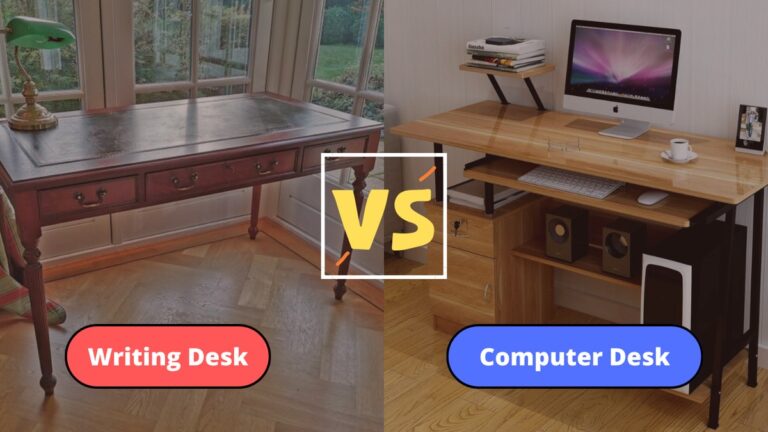
A compact writing desk with one drawer can work beautifully for journaling, admin, and light laptop use. It may not work at all for dual monitors, audio equipment, or large-format sketching. That is why workflow should come before style.
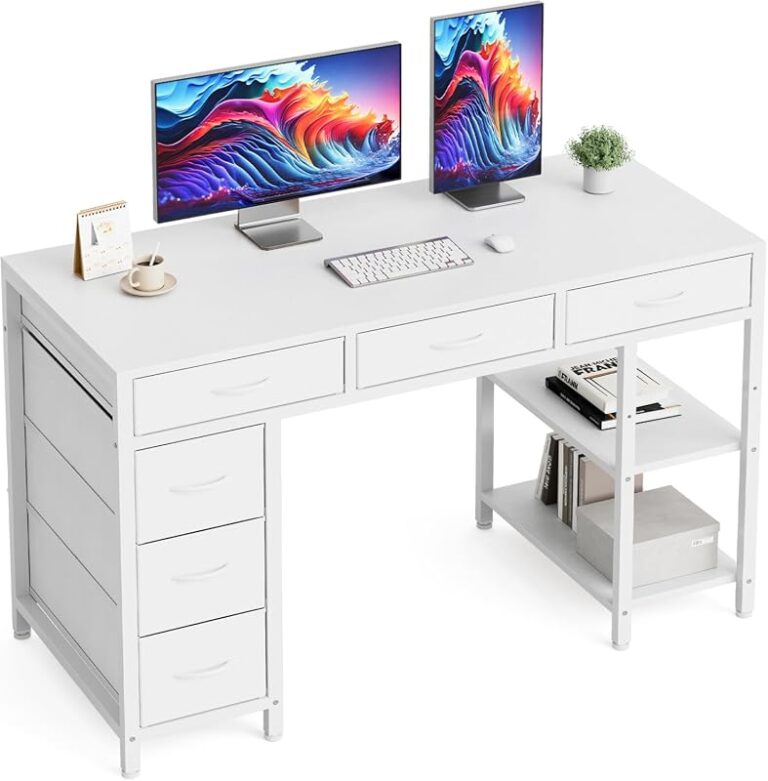
If you mainly write or answer emails, prioritize open knee space, a clean top, and just enough storage for stationery and chargers. If you work from a laptop but dock it to a monitor, make sure the desk depth supports a comfortable screen distance. If you use dual monitors, a printer, or speakers, surface width becomes just as important as storage. If you do creative work, you may need room for spreading out materials, not just stacking them.
For digital creatives, a desk may also need to accommodate a drawing tablet, cable routing, and accessory storage. In that case, it helps to think of the desk as part of a larger setup rather than a standalone furniture purchase. Our article on how to choose a drawing tablet for digital art pairs naturally with this decision if your workstation needs to support both tech and hand tools.
Choose the right storage type: drawers, shelves, cabinets, cubbies, or hidden compartments
Different storage types solve different problems:
- Drawers are best for small items you want hidden, such as pens, papers, chargers, and notebooks.
- Open shelves work well for books, baskets, and decor, but they require tidier styling.
- Cabinets help conceal bulkier or less attractive items like routers, reams of paper, or office supplies.
- Cubbies can be useful for bins and quick sorting, especially in multifunctional rooms.
- Hidden compartments are helpful for keeping a desk visually minimal, though they vary widely by model.
If you hate visual clutter, lean toward closed storage. If you like easy access and a lighter look, a mix of one or two drawers plus open shelving often feels more balanced.
If a desk has open shelving on the side you face while working, make sure it will not crowd your knees or force you to sit off-center. Storage should support your posture, not dictate it.
Measure Before You Buy: Desk Size, Legroom, and Placement Rules That Matter
Tape measure marks desk width, depth, and clearance in a home office.
Most desk-buying mistakes are measurement mistakes. A desk can look compact online and still overwhelm a room once you account for chair clearance, drawer pull-out space, and walking paths.
Standard desk dimensions and how much surface area you really need
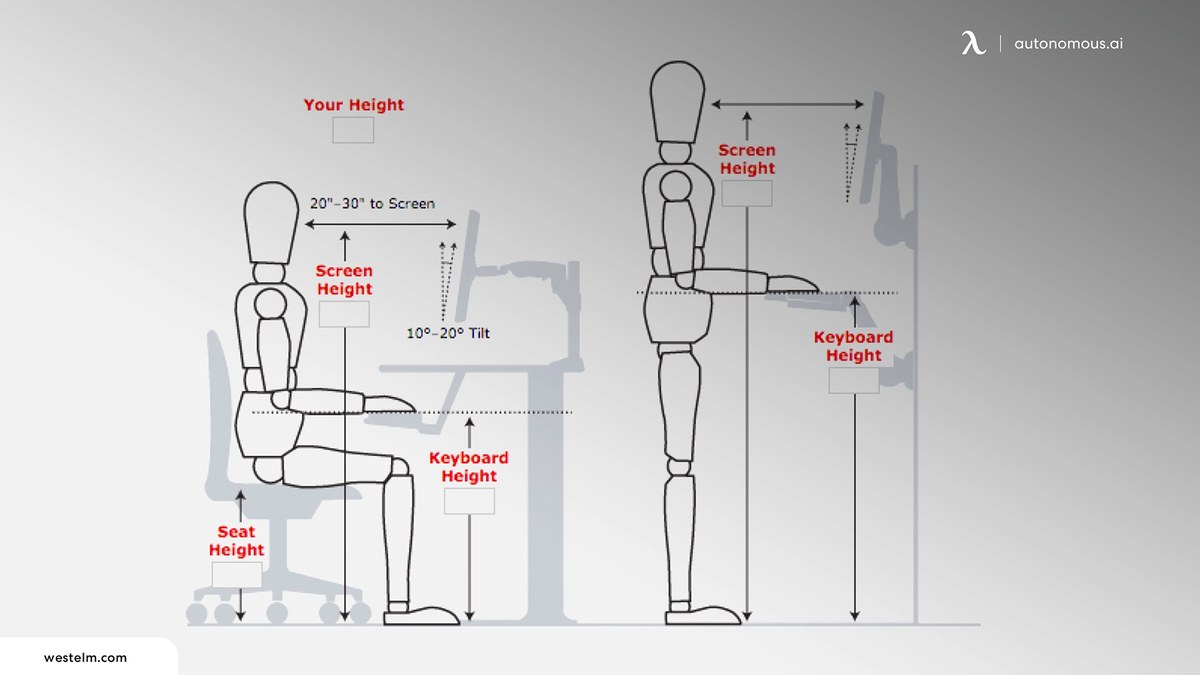
Desk dimensions vary by type, but there are a few practical guidelines. Standard desk height is commonly around writing-desk height, while width and depth vary more dramatically by design. The key is not chasing a “standard” size but matching the top surface to your actual setup.
A laptop-only user can often work comfortably on a smaller footprint than someone using a monitor, desk lamp, files, and a mug all at once. A writing desk may feel generous for simple tasks but cramped if you need reference books open beside a keyboard. Creative work usually benefits from extra depth because tools and materials spread outward, not just upward.
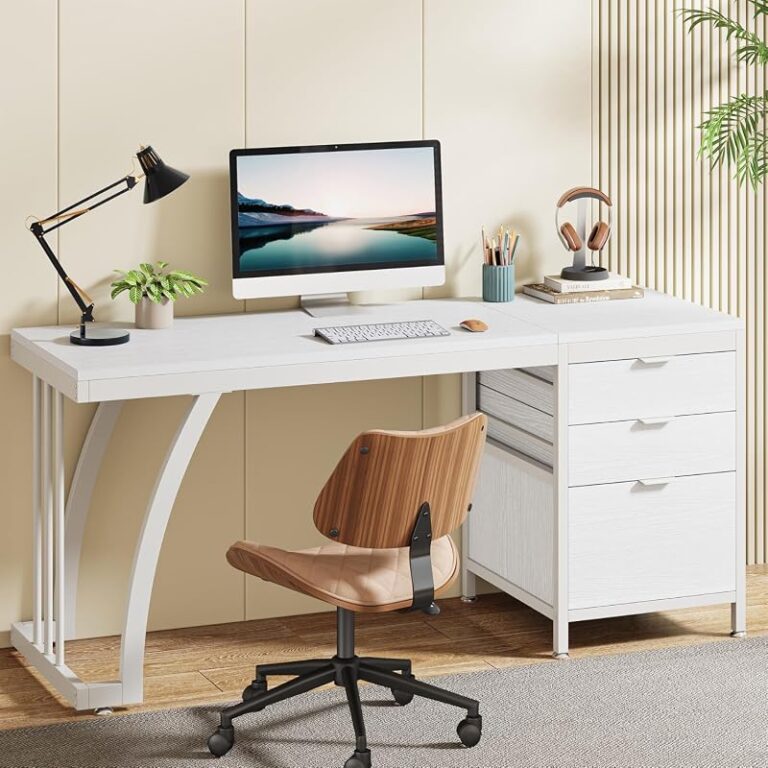
If you are choosing for a very tight footprint, a small writing desk with storage can be a smart starting point, especially in apartments or guest rooms where every inch matters.
Clearance for chairs, knees, drawer pull-outs, and walking paths
Do not measure only the wall where the desk will sit. Measure the full working zone. That includes:
- space for your chair to slide in and out
- knee clearance beneath the desk
- drawer extension in front or to the side
- walking space behind the chair
- clearance from radiators, outlets, baseboards, or window trim
A desk with deep file drawers may function poorly in a narrow room because the drawer fronts and chair occupy the same movement area. Likewise, a desk with side storage can reduce where your legs naturally want to sit.
Before buying, map the footprint on the floor with painter’s tape. Then pull out a chair and simulate how you will sit, swivel, and reach. It is one of the easiest ways to catch a sizing problem before delivery day.
Manufacturer dimensions often show the outer footprint only. Confirm interior knee width, drawer depth, and full extension requirements on the official product listing if those details matter to your setup.
Best placements for small bedrooms, dedicated home offices, living rooms, and alcoves
Placement changes how a storage desk feels.
In a small bedroom, a visually light desk with slim legs, a shallow profile, or one pedestal usually feels less imposing than a bulky double-pedestal design. In a dedicated home office, you can prioritize function more aggressively, especially if the room can absorb a larger silhouette. In a living room, a desk often needs to read as furniture first and workstation second, so concealed storage and polished finishes matter more. In an alcove, precise measuring becomes critical because even a small overhang can make the fit look awkward.
If your desk will sit near wall art, shelving, or display ledges, leave enough visual separation so the area does not feel compressed. Styling the wall above a desk is often easier when the furniture below is restrained rather than oversized.
What to Look For in a Desk With Storage: Construction, Function, and Everyday Practicality
Once size and layout make sense, focus on how the desk is built. A handsome desk that wobbles, sticks, or wastes interior space will get frustrating quickly.
Stability, weight capacity, and joinery quality
Storage adds weight, and work equipment adds more. That means stability matters even more in a storage desk than in a simple table-style desk.
Look for a desk that sits level, has reinforced corners or stretchers where appropriate, and uses solid joinery rather than relying entirely on thin panels and minimal fasteners. If you plan to place heavy monitors, printers, or stacks of books on top, check the product specifications for stated weight guidance. If that information is missing, ask the retailer or manufacturer directly before buying.
Also pay attention to where the storage sits. A desk with all the weight concentrated on one side may be perfectly fine, but it should still feel balanced in its design and construction.
Drawer depth, smooth runners, soft-close features, and usable interior space
Not all drawers are equally useful. A desk may advertise multiple drawers, but shallow compartments can be better for stationery than for files, notebooks, or tech accessories.
Look beyond drawer count and ask:
- Are the drawers full depth or only partial depth?
- Do they glide on smooth runners?
- Do they open wide enough to access the back easily?
- Is the top drawer shaped around support rails, reducing usable space?
- Are file drawers sized for the documents you need to store?
Soft-close hardware is a quality-of-life feature rather than a necessity, but it can make a desk feel more refined in daily use. More important is whether the drawer interiors are practical for the things you actually own.
Cable management, power access, and tech-friendly details for 2026 home offices
In 2026, a desk that ignores cables entirely can feel outdated fast. Many buyers now need some combination of laptop charging, monitor power, task lighting, speakers, routers, docking stations, or wireless accessories.
Useful tech-friendly details include cable cutouts, modesty panels that hide cords, rear openings for power strips, charging shelves, and enough underside clearance to mount or place accessories neatly. Some desks include integrated power features, but these vary by model and retailer, so verify exact specifications before you buy.
If your desk area also doubles as a styled backdrop, lighting becomes part of the overall plan. For readers refining the wall lighting around a workspace, our guides on how to choose a picture light for artwork and how to choose a dimmable picture wall light can help create a more layered setup without overwhelming the desk itself.
Choosing the Right Material and Finish for Style, Durability, and Maintenance

Desk material samples and finish swatches are arranged for comparison.
Material affects not just appearance, but weight, longevity, maintenance, and how forgiving the desk will be in daily life.
Solid wood, engineered wood, metal, glass, and mixed-material desks compared
Solid wood usually offers warmth, character, and good repair potential over time, though it can be heavier and often more expensive. Engineered wood can offer a cleaner price-to-function balance and a wide range of finishes, but quality varies significantly by construction and surface treatment. Metal adds strength and often suits contemporary or industrial interiors, especially when paired with wood. Glass can make a room feel lighter, but it shows fingerprints easily and offers less visual concealment for storage. Mixed-material desks often provide the best stylistic flexibility, combining visual warmth with structural support.
How finish affects scratch resistance, heat tolerance, and long-term appearance
A desk’s finish often matters as much as its base material. Matte finishes can disguise fingerprints and minor marks better than high gloss. Dark finishes can look rich and dramatic, but they may show dust and scratches more readily. Very pale finishes can brighten a room, though some may reveal stains or edge wear over time depending on the surface treatment.
If you rest hot mugs, use craft tools, or move equipment often, durability becomes more important than a perfectly trend-forward finish. Always check the manufacturer’s care instructions for heat, moisture, and cleaning guidance, especially on veneers, laminates, lacquered surfaces, and glass tops.
Which materials suit minimalist, classic, contemporary, and design-led interiors
For minimalist interiors, look for simple forms, integrated storage, and finishes that blend rather than contrast sharply. For classic rooms, wood tones, paneled drawers, and traditional silhouettes often feel more at home. For contemporary spaces, crisp lines, mixed materials, and concealed cable management usually work well. In design-led interiors, a sculptural desk can become a focal point, but it still needs to function on an everyday level.
The key is consistency. A desk should relate to the room’s shelving, hardware, lighting, and surrounding furniture rather than looking like an isolated office insert.
Which Desk With Storage Fits Your Room Best?
Desk type matters because it shapes both storage capacity and the visual tone of the room.
Best options for compact apartments and multifunctional rooms
In smaller homes, the best desk is often the one that can disappear visually when you are not working. Slim writing desks with one or two drawers, secretary desks with closable fronts, and wall-leaning designs can all work well where a full office setup is not possible.
Multifunctional rooms benefit from desks that store enough to reduce spillover. If the desk sits in a guest room, dining nook, or living space, hidden storage usually looks tidier than open shelving packed with office supplies.
When to choose a compact writing desk, executive desk, secretary desk, or wall-leaning design
Choose a compact writing desk if you need a light footprint and only modest storage. Choose an executive desk if you have a dedicated office, more equipment, and the room scale to support a larger piece. Choose a secretary desk if you want the ability to close away work at the end of the day. Choose a wall-leaning design if you need vertical efficiency and a more casual, modern look.
If you are unsure about terminology while shopping, it can help to understand the differences between common desk categories. Our article on what a small writing desk with drawers is called breaks down the naming you may see across retailers.
How to balance storage with visual lightness in smaller spaces
In a small room, storage should not dominate the eye line. Look for desks with raised legs, open space beneath part of the frame, lighter finishes, or asymmetrical storage that keeps the silhouette from feeling blocky. Even a practical desk can feel airy if the bulk is visually broken up.
Another trick is to move some storage upward rather than outward. A desk paired with nearby shelving can sometimes feel lighter than a single oversized desk trying to contain everything.
Styling a Storage Desk So It Looks Curated, Not Cluttered
A desk with storage should still feel intentional in the room. The goal is not empty minimalism, but controlled visibility.
Layering task lighting, seating, and desk accessories with intention
Start with the essentials: chair, task light, and one or two desktop tools you use every day. Then add only what improves function or atmosphere. A lamp with a clean profile, a supportive chair that suits the room, and a tray for small items will usually do more than a dozen decorative objects.
If the desk is in a living room or bedroom, choose accessories that echo the room’s materials and tones so the workstation feels integrated rather than improvised.
Using trays, file boxes, and book stacks to keep open storage polished
Open storage looks best when it is grouped. Trays keep loose objects contained. File boxes hide paperwork without making it inaccessible. Book stacks can anchor smaller objects and make shelves feel more deliberate.
The key is editing. Leave some negative space so the eye can rest. Open shelves filled edge to edge tend to read as clutter, even when everything is technically organized.
- Limit desktop decor to a few useful pieces: lamp, tray, notebook, and one personal object.
- Use matching file boxes or baskets if your desk has open shelves.
- Repeat one finish or color from elsewhere in the room to make the desk feel intentional.
- Keep at least part of the top surface clear for visual calm and practical flexibility.
How to coordinate your desk with shelving, art, and surrounding furniture
Think of the desk as part of a composition. If you have shelving nearby, repeat shapes or finishes so the room feels cohesive. If art hangs above the desk, make sure the scale relates to the furniture below. A very large desk under tiny artwork can feel top-heavy; the reverse can feel visually unstable.
Wall decor should support the workspace without crowding it. A restrained arrangement usually works better above a storage desk than a busy one.
The Benefits, Limitations, and Common Buying Mistakes to Know Before You Commit
A storage desk can be transformative in the right room, but it is not a universal solution.
Why a storage desk can improve focus, organization, and room efficiency
When daily tools have a dedicated place, it becomes easier to reset your workspace at the end of the day. That can improve focus, reduce visual noise, and make a multifunctional room feel less chaotic. A well-chosen storage desk can also reduce the need for extra filing cabinets or side units, which matters in smaller homes.
Potential drawbacks: bulk, reduced legroom, visual heaviness, and awkward access
The tradeoff is that storage adds mass. Some desks feel bulky in person, especially in narrow rooms or spaces with limited natural light. Others sacrifice comfort by placing drawer stacks where your knees want to go. Open side shelving can also look untidy if you do not plan for containers or editing.
- Keeps essentials close to hand
- Reduces surface clutter
- Can replace additional storage furniture
- Works well in multipurpose rooms when storage is concealed
- Can reduce legroom
- Often looks heavier than a simple desk
- Drawer layouts may waste space
- Poor sizing can block walkways or chair movement
Mistakes to avoid, from overbuying storage to ignoring ergonomics and drawer clearance
The biggest buying mistake is assuming more compartments equal better organization. In reality, too much built-in storage can leave you with a desk that is oversized for your room and underperforming for your workflow.
Other common mistakes include ignoring monitor depth, forgetting chair movement, overlooking cable needs, and failing to confirm drawer dimensions. It is also easy to buy for a fantasy version of your routine instead of the one you actually live with every day.
Care, Long-Term Value, and the Smart Final Choice for 2026
A good desk should hold up physically and stylistically. That means choosing something you can maintain, live with, and adapt as your work changes.
Material-specific cleaning and maintenance tips
Always follow the maker’s care instructions first, since finishes vary. In general, wood and engineered wood surfaces benefit from gentle cleaning with a soft cloth and prompt attention to spills. Metal usually needs simple dusting and occasional wiping. Glass requires regular cleaning to control fingerprints and smudges.
Protect desk surfaces from standing moisture, harsh cleaners, and direct heat unless the manufacturer specifically states the finish is designed for it. Veneers, laminates, lacquered finishes, and wood tops can all react differently.
How to judge value: price vs. build quality, lifespan, and versatility
Value is not just about price. A desk is better value when its construction, storage layout, and size remain useful for years. Check what the retailer or manufacturer confirms about materials, hardware, assembly method, care, and warranty terms. If specifications seem vague, that uncertainty should factor into the decision.
A slightly simpler desk with better proportions and stronger construction is often a smarter buy than a feature-heavy desk with mediocre usability.
Final recommendation: the best desk with storage is the one that fits your space, tools, and daily routine
The smartest final choice is usually not the desk with the most drawers or the boldest design. It is the one that gives you enough surface area for your real work, enough storage for your real tools, and a shape that still lets the room function comfortably.
Before you commit, confirm dimensions, interior storage details, materials, care guidance, and any tech features on the official product listing. If those details align with your workflow and your room layout, you are far more likely to end up with a desk that feels professional, practical, and easy to live with.
Frequently Asked Questions



16 Comments