Artwork Transport: Complete Guide to Moving Art Safely

The right artwork transport case depends on the piece’s size, surface sensitivity, and how far it needs to travel. A snug fit, stable support, and the right case type matter more than looks alone.
Artwork transport is the part of the art world that protects value before a piece ever reaches a wall, shelf, or gallery pedestal. The right case helps reduce scuffs, pressure marks, moisture exposure, and movement in transit, while also making handling more organized for artists, collectors, galleries, and installers.
- Fit first: Measure the full outer dimensions of the artwork, not just the image size.
- Match protection to risk: Rigid cases suit fragile or valuable works better than soft cases.
- Prevent movement: The piece should sit flat and stable without sliding or pressure damage.
- Think workflow: Reusable cases help with exhibitions, deliveries, and studio storage.
Artwork Transport: What It Is and How to Choose the Right Case
Artwork transport refers to the safe movement of art from one place to another, whether that means a studio-to-client delivery, an exhibition loan, a fair shipment, or long-term storage between locations. The case you choose should match the artwork’s size, surface sensitivity, frame depth, and how often the piece will be moved.
For most buyers, the decision comes down to three questions: how fragile is the work, how far will it travel, and how often will it be packed and unpacked? A good case is not just a container; it is part of the preservation strategy. If a piece has an unusual format or a delicate surface, it is often worth confirming specifications on the manufacturer’s listing rather than assuming one case will fit every work.
Why Artwork Transport Matters for Galleries, Collectors, and Artists in 2026
In 2026, artwork often moves through more hands and more settings than people expect. A piece may leave a studio, visit a framing shop, travel to a collector’s home, and return to storage before it is ever permanently installed. Each transfer adds risk, especially for works on paper, glazed frames, and mixed-media pieces with raised surfaces.
For galleries, artwork transport supports professional presentation and reduces the chance that a sale, loan, or exhibition is compromised by avoidable damage. For collectors, it helps preserve condition and resale value. For artists, it can protect inventory during delivery and help maintain a polished brand image when pieces arrive clean and intact.
There is also a practical workflow benefit: the right case makes inventory easier to organize, label, and stack safely. That matters whether you are moving one framed print or a larger rotating selection of editions. For framed canvas works specifically, it can help to compare transport needs with the structure of the piece itself, which is why Hurrell Editions also covers frames for canvas artwork in more detail.
Key Features to Look For in Artwork Transport Cases
Not every case needs to be rigid, waterproof, or custom-built. But every case should solve the same basic problem: keep the artwork stable, cushioned, and easy to handle without adding avoidable strain.
Protection Materials, Padding, and Interior Support
Look first at what touches the artwork. Interior surfaces should be smooth, non-abrasive, and free of loose fibers or rough seams. Padding should support the piece without compressing delicate surfaces, especially if the work has varnish, glazing, textured paint, or fragile paper edges.
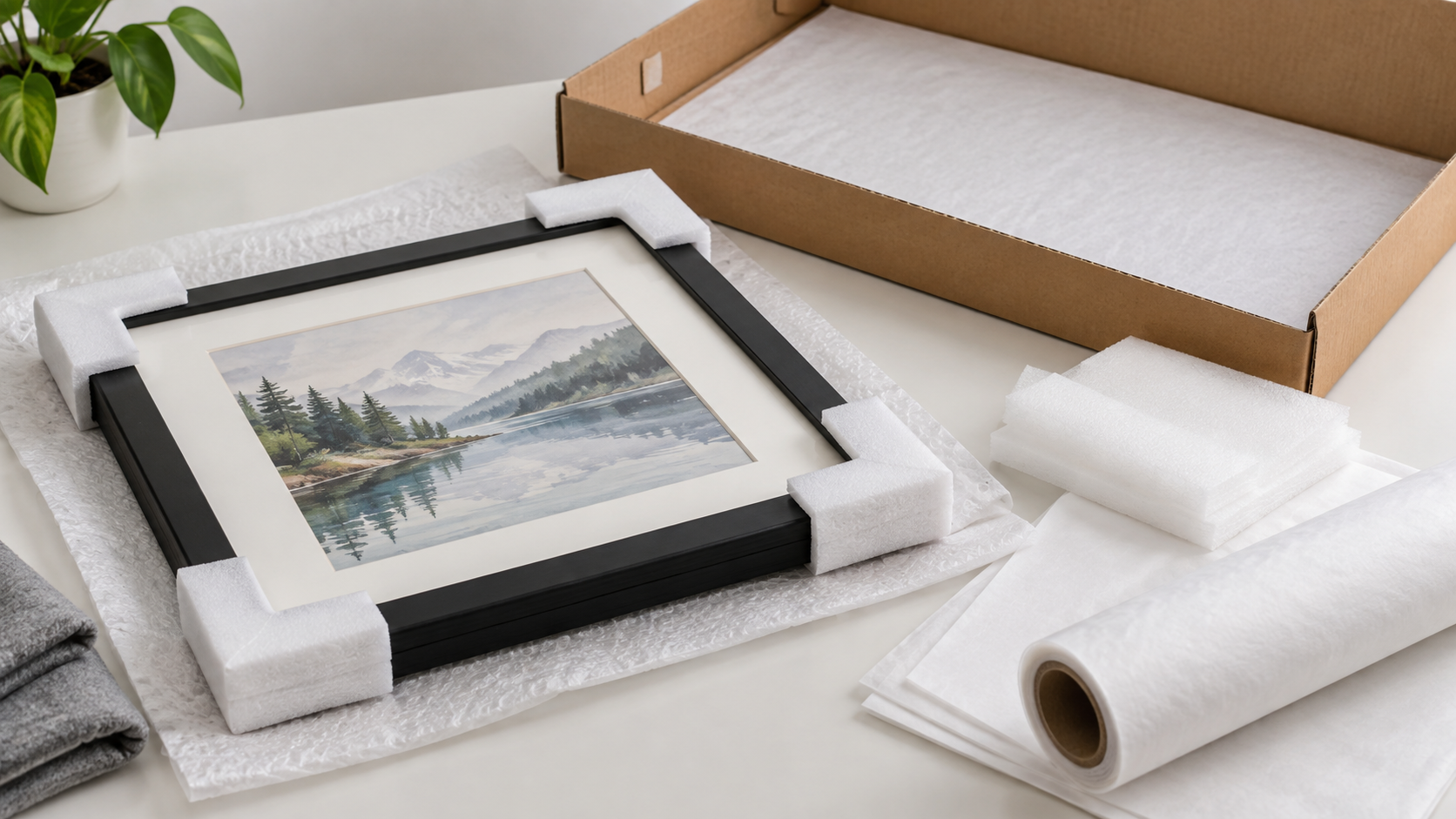
If the piece is framed under glass or acrylic, the transport case should also account for breakage risk. That does not necessarily mean the heaviest case is best, but it does mean the interior should prevent vibration and direct pressure on the glazing.
Small Editions, Oversized Pieces, and Irregular Formats
Small editions are often easier to protect, but they can still shift if the case is oversized. For these, a compact case or insert system may be more efficient than a large general-purpose container. Oversized pieces usually need custom sizing, stronger handles, and a plan for two-person handling.
Irregular formats are the hardest to fit into standard transport solutions. Sculptural elements, unusual frame profiles, or mixed-media attachments may require custom foam, custom crating, or a case built around the object rather than around a generic rectangle. When the format is unusual, the safest move is usually to verify dimensions and support points before buying anything premade.
Comparing Artwork Transport Options: Soft Cases, Hard Cases, and Custom Solutions
There is no single best option for every situation. Soft cases are lighter and easier to store, hard cases are generally more protective, and custom solutions solve unusual sizing or fragility problems that standard products cannot address.
Best Uses, Benefits, and Limitations of Each Type
- Soft cases: lighter, easier to carry, and often better for frequent short trips or lower-risk movement.
- Hard cases: stronger shell protection, better resistance to crushing, and more confidence for longer transit.
- Custom solutions: tailored fit for unusual sizes, fragile surfaces, or mixed-media works with protruding elements.
- Soft cases: usually offer less impact protection and may not be ideal for valuable or fragile works.
- Hard cases: can be heavy, bulky, and less convenient for storage when not in use.
- Custom solutions: typically cost more and may take longer to source or build.
Soft cases are often best for studio routines, local deliveries, or works that already have another layer of protection. Hard cases are a stronger fit for shipping, exhibition travel, and higher-value pieces where compression risk matters. Custom solutions are the most appropriate choice when the artwork is too delicate, too large, or too irregular for a standard container.
When a Standard Case Is Enough and When to Go Custom
A standard case is usually enough when the artwork has a predictable shape, moderate value, and a frame or support system that fits common dimensions. It can also be the most cost-effective choice for editions or works that move often but do not need museum-level packaging.
Go custom when the piece has unusual depth, a fragile protrusion, an oversized format, or a finish that cannot tolerate contact. Custom is also worth considering when the artwork travels frequently and the same fit will be used repeatedly. For the right piece, the added precision can reduce handling risk and make packing faster over time.
- Confirm outer dimensions, frame depth, and any protruding hardware
- Check the case’s intended use: local carry, shipping, storage, or exhibition travel
- Verify whether padding, inserts, or dividers are included or sold separately

How to Size and Pack Artwork Safely for Transport
Even the best case can fail if the artwork is packed loosely or measured incorrectly. Safe packing depends on careful measurement, stable placement, and enough protection to stop the piece from moving inside the case.
Measuring Artwork, Frames, and Protective Layers
Measure the outermost points of the artwork, including the frame, stretcher bars, glazing, and any hardware that affects depth. Then account for the protective layers you plan to use, such as glassine, foam corners, board, or wrap. If the piece will be stored in a sleeve or nested inside another protective layer, that thickness should be included too.
It helps to write down three numbers: width, height, and depth. For large collections, a simple inventory note with those dimensions can save time later and reduce the chance of ordering the wrong case size.
Placement, Securing the Piece, and Avoiding Movement in Transit
The artwork should sit flat, centered, and fully supported. Empty space around the work should be minimized unless the case design specifically calls for it. If the piece can slide, tilt, or bounce when the case is gently moved, it is not packed securely enough.
For layered protection, place the softest, cleanest material closest to the artwork and the firmest support outside that layer. Avoid over-tightening straps or compressing delicate surfaces. The goal is restraint without pressure. If you need a more display-oriented support solution after transport, a related guide on tabletop easel stand sizing for framed artwork can help with presentation decisions.
Do not assume that “snug” is always safe. Excess pressure can damage corners, warp paper, or leave marks on delicate finishes, especially in heat or humidity.
Style, Presentation, and Professional Use in a Creative Workflow
Artwork transport is not only about protection. In a creative business, the case is part of the experience a client, curator, or installer sees before the artwork is even displayed. That makes presentation and workflow worth considering alongside durability.
How Artwork Transport Supports Exhibitions, Client Deliveries, and Studio Storage
For exhibitions, a well-organized case helps keep incoming and outgoing works separate, labeled, and easier to unpack in sequence. For client deliveries, it can make the handoff feel more deliberate and professional. In studio storage, it can protect unsold work from dust, scuffs, and accidental contact while making inventory easier to rotate.
Artists who move work regularly often benefit from a repeatable packing system. That may include the same labels, the same orientation marks, and the same internal layering method for each piece. Consistency reduces errors, especially when deadlines are tight.
Many condition problems happen during handling, not just during long-distance shipping. A stable case can reduce the number of times an artwork needs to be touched directly.
Matching Transport Cases to a Refined, Professional Brand Image
For artists, galleries, and design-forward collectors, the case itself can reinforce a brand’s visual language. Clean lines, restrained finishes, and organized labeling tend to feel more polished than improvised packaging. That does not mean the case must be decorative; it means it should look intentional.
If your workflow includes client-facing deliveries, a case that opens neatly and presents the work in an orderly way can make a strong impression. If your brand leans minimalist, understated materials often fit better than flashy hardware. If your work is more experimental, a custom case can mirror that individuality without sacrificing protection.
- Choose a case finish that feels consistent with your studio or gallery identity.
- Use clear labeling so the piece can be identified quickly without opening every container.
- Keep packing materials clean and uniform so the presentation stays professional.
Care, Maintenance, and Common Mistakes to Avoid
Transport cases last longer and protect better when they are inspected regularly. Small issues like worn closures, crushed padding, or dirty interiors can become bigger problems if they are ignored between uses.
Cleaning, Storage, and Inspection After Use
After transport, inspect the case for loose hardware, moisture, abrasions, and any signs of compression inside the lining or padding. If the case has removable inserts, check them separately so hidden wear does not go unnoticed. Keep the interior clean and free of grit, tape residue, and debris that could mark the next artwork.
Store cases in a dry, stable area away from direct sunlight and major temperature swings. If the case is collapsible or stackable, make sure it is stored in a way that does not bend its frame or crush its protective surfaces. For long-term use, manufacturer care instructions should take priority over general cleaning habits.
Frequent Packing Errors That Risk Damage
One of the most common mistakes is choosing a case based on the artwork’s image size instead of its full outer dimensions. Another is leaving too much empty space, which allows movement and vibration. Overpacking can be just as risky, especially when pressure lands on corners, glazing, or textured paint.
It is also easy to overlook environmental exposure. A case that protects against bumps may still leave the artwork vulnerable to humidity or heat if it is stored in the wrong place before or after transport. When in doubt, the safest approach is to reduce handling, verify the fit, and keep the piece in a stable environment as much as possible.
- Measure the full framed or crated object, not just the visible artwork.
- Choose materials that support the piece without pressing on the surface.
- Inspect closures, corners, and interior padding before every use.
- Using a loose case “for now” when the piece is already valuable or fragile.
- Stacking works in a way that lets frames or glazing contact each other.
- Assuming one case size will work for every edition or frame style.
Final Verdict: The Best Artwork Transport Approach for Different Needs
The best artwork transport approach depends on how fragile the work is, how often it moves, and whether the trip is local, long-distance, or exhibition-related. For simple, repeatable moves, a well-sized standard case may be enough. For valuable, oversized, or unusually shaped pieces, a hard case or custom solution is usually the safer investment.
If you want the most practical all-around strategy, start with accurate measurement, then choose the lightest case that still gives the piece stable support and reliable protection. When the artwork is especially delicate or the fit is uncertain, custom planning is usually worth the extra effort. In other words, the right case is the one that protects the work without making handling harder than it needs to be.
For most galleries and serious collectors, a rigid, reusable case with a precise interior fit offers the best balance of protection, presentation, and long-term value. The main limitation is size and weight, so confirm handling needs before you commit.
Artwork Transport Supplies Worth Considering
If you move artwork more than once, a few practical supplies make the process safer: corner protectors, acid-free paper, foam padding, rigid flat boxes, and portfolio transport cases for works on paper. Choose the supply based on the artwork size, frame depth, distance, and how often you move pieces.
| Transport need | Useful option | What to check |
|---|---|---|
| Framed artwork | Corner protectors, foam sheets, and rigid boxes | Frame depth, glass protection, and movement inside the box. |
| Flat prints or drawings | Portfolio case with sleeves or acid-free interleaving paper | Internal size, closure quality, and whether sleeves are archival. |
| Short local move | Reusable padded case or flat file-style carrier | Handle comfort, stiffness, and weather resistance. |
| Longer transport | Layered packing materials plus a rigid outer container | Crush resistance, moisture control, and secure taping. |
See Artwork Transport Supplies on Amazon
Related Hurrell Editions Guides
Common Questions
Frequently Asked Questions