How to Organize Acrylic Paint Bottles in Small Rooms

Use vertical storage, sort bottles by size and frequency of use, and keep everyday colors visible and within easy reach. In most small rooms, a hybrid system with open access for active paints and closed storage for extras works best.
Learning how to organize acrylic paint bottles in a small room starts with one simple goal: make every color easy to see, easy to reach, and easy to put back. In tight bedrooms, home offices, and shared creative corners, the best setup usually combines vertical storage, a clear sorting system, and protection from heat, sun, and clutter.
Small-room paint storage works best when it supports the way you actually paint. That means choosing organizers based on bottle size, desk space, wall options, and how often you reach for certain colors rather than buying the biggest rack you can find and hoping it solves everything.
- Start with sorting: Separate bottles by size, use frequency, and condition before buying storage.
- Use wall space: Vertical racks often save more room than bulky desktop bins or extra furniture.
- Protect the paint: Keep bottles upright and away from direct sun, heat, and damp areas.
- Choose fit over capacity: Organizer dimensions matter more than big bottle-count claims.
- Mix open and closed storage: Visible daily-use paints plus hidden backup stock is usually the most practical setup.
How to Organize Acrylic Paint Bottles in a Small Room: Start With Visibility, Access, and Vertical Space
If acrylic paint bottles disappear into bins, stack behind each other, or crowd your work surface, the room feels smaller and your workflow slows down. A good system keeps labels readable, prevents duplicates, and uses height instead of sacrificing valuable desk area.
In most small rooms, the smartest order of priorities is visibility first, daily access second, and storage density third. A slightly less compact setup is often more useful than a tightly packed one that hides half your colors.
Why bottle size, frequency of use, and paint condition should shape your setup
Not all acrylic paint bottles are the same height, width, or cap style. Craft paint, artist acrylics, miniature hobby paints, and specialty finishes can all require different shelf depths and opening heights. Before choosing an organizer, separate your bottles by approximate size so you can tell whether you need narrow tiers, deeper cubbies, or mixed storage.
Next, sort by frequency of use. Keep your everyday neutrals, primaries, white, black, and favorite mixing colors closest to the desk. Less-used metallics, seasonal colors, textile mediums, varnishes, or backup bottles can go higher up, into drawers, or inside a cabinet.
It also helps to check paint condition before organizing. Set aside bottles with cracked lids, dried residue, or separated paint that may need cleaning or replacement. There is little benefit in giving prime space to bottles you no longer trust or use.
The fastest way to reduce clutter without losing track of colors
The quickest reset is to pull every bottle into one visible group, wipe off residue, then make three categories: use often, use sometimes, and rarely use. Once that is done, remove obvious duplicates you do not need at your desk and combine scattered paint from unrelated areas of the room.
This first pass often reveals that the real problem is not the number of bottles but where they are stored. Paint spread across drawers, windowsills, tote bags, and shelves is harder to manage than a larger collection kept in one defined zone.
If your broader creative area also feels cramped, Hurrell Editions has a helpful guide on how to organise art supplies in a small space that pairs well with bottle-specific storage planning.
Assess the Room Before You Buy Storage: Wall Space, Desk Depth, Light, and Temperature

Shelves, desk depth, window light, and room temperature are visible in a compact paint workspace.
Storage that looks efficient online can become awkward fast in a small room. A rack may be too deep for a narrow desk, a rolling cart may block a closet door, or an open shelf may place paint directly in strong afternoon sun. Measuring the room first prevents expensive guesswork.
Which small rooms work best for open shelving, drawers, carts, or over-door storage
Bedrooms and compact studios often benefit from wall-mounted or over-desk storage because floor space is limited. If you have a shallow desk, tiered desktop organizers can still work, but only if they leave enough room for water cups, brushes, palettes, and active projects.
Home offices that serve more than one purpose usually do better with drawers, lidded bins, or a small cart that can roll away when the room shifts back into work mode. Shared spaces benefit from storage that looks intentional when not in use, especially if paint bottles sit near bookshelves, filing cabinets, or guest furniture.
Closets can be useful for overflow storage, but only if you can still see labels without digging through stacked containers. Over-door organizers help in very tight rooms, though pocket depth and bottle fit vary by model.
How heat, sunlight, and humidity can affect acrylic paint bottles over time
Acrylic paint stores best in a stable indoor environment away from direct sun, high heat, and damp conditions. Window ledges, radiators, and humid bathrooms are poor choices, even if they seem convenient. Excess heat can shorten usable life, while strong sunlight may warm bottles and make storage areas less stable over time.
Humidity is also worth watching in basements, converted sheds, or laundry-adjacent spaces. Moisture can affect labels, shelving materials, and the general cleanliness of your storage zone.
Store acrylic paint bottles upright in a cool, dry area out of direct sunlight. Always confirm manufacturer care guidance for specialty paints, mediums, and additives before long-term storage.
What to Look for in Acrylic Paint Bottle Storage for Small Rooms
Once you know your room limits, compare organizers by fit rather than style alone. The best option is the one that matches your bottle collection, available surfaces, and tolerance for visible supplies.
Capacity, bottle compatibility, and whether racks fit craft, artist, or hobby paint sizes
Capacity numbers can be misleading if they assume one bottle shape. A rack that fits short craft paints may not suit taller flip-cap bottles or wider hobby paints. Check compartment width, shelf lip height, and tier spacing against your actual collection before buying.
If your bottles come from multiple brands, mixed storage may be more practical than a single uniform rack. In that case, use one organizer type for standard bottles and a separate drawer or bin for unusual sizes, mediums, or backup stock.
Materials and specifications: acrylic, wood, metal, stackable plastic, and weight limits
Clear acrylic organizers are popular because they keep labels visible and feel light in small rooms. Wood can look warmer and blend better with furniture, while metal often feels more utilitarian and may suit workshop-style spaces. Stackable plastic systems are flexible, but they vary widely in sturdiness and drawer smoothness.
Weight matters most with wall-mounted storage and stacked units. Manufacturer specifications should list intended use, dimensions, and any weight guidance. If those details are vague, confirm them before buying, especially for wall-mounted racks or tall stacked drawers.
- Measure the tallest and widest bottles in your collection, not just the average ones.
- Check shelf depth, tier spacing, drawer height, and total footprint against your desk or wall area.
- Confirm wall type, mounting method, and weight guidance for any rack that hangs.
- Look for enough visibility that you can identify colors without unloading the whole organizer.
Open display vs closed storage: dust protection, visibility, and spill control
Open racks are best for quick access and color visibility. They suit active painting areas where you reach for bottles often and want a visual overview at a glance. The tradeoff is dust, visual busyness, and less protection if a bottle leaks.
Closed storage works better in multipurpose rooms, especially if you prefer a calmer look. Drawers and cabinets hide clutter and protect bottles from dust, but they can make color selection slower unless you label well.
A hybrid system is often ideal: open storage for frequently used paints and closed storage for backstock, mediums, specialty finishes, or duplicates.
Best Small-Room Storage Types and Where Each One Fits<
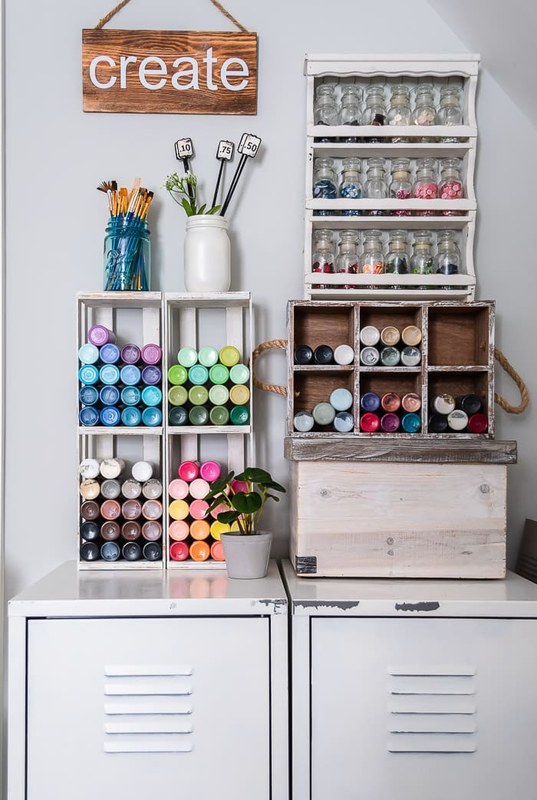
Small-room storage options organize acrylic paint bottles along one wall.
Small-room storage options organize acrylic paint bottles along one wall.
/h2>
No single organizer is best for every room. The right choice depends on whether your biggest limitation is desk area, floor space, visual clutter, or the need to move supplies around.
| Option | Best For | Key Consideration |
|---|---|---|
| Wall-mounted rack | Narrow rooms with free wall space | Check wall type and safe load capacity |
| Desktop tiered organizer | Frequent painting and quick color access | Can reduce usable desk depth |
| Drawer unit | Shared or multipurpose rooms | Needs labels to stay easy to navigate |
| Rolling cart | Flexible setups and portable supplies | Requires floor clearance |
| Over-door storage | Very tight rooms with limited furniture space | Pocket size and bottle fit vary |
Wall-mounted racks for narrow rooms and unused vertical space
Wall-mounted racks are often the best answer when desk space is scarce. They lift paint off the work surface and turn a blank wall, the side of a bookcase, or the area above a desk into useful storage.
They work especially well for medium-size collections that you want to keep visible. Just be cautious with weight, wall material, and reach height. Bottles stored too high become inconvenient, and overloaded racks are not worth the risk.
Desktop tiered organizers for quick access in active painting areas
Tiered organizers keep labels visible in rows and make color selection fast. They are a strong choice if you paint often and want everything within arm’s reach. This style is especially helpful for artists who work in short sessions and do not want setup time to become a barrier.
The drawback is footprint. On a shallow desk, even a compact organizer can make the workspace feel crowded. If your desk is already overloaded, review these ideas on how to organize a desk for an artist before adding another surface-level storage piece.
Drawer systems, carts, and under-shelf solutions for flexible storage
Drawers are useful when bottles need protection from dust or when the room doubles as an office or bedroom. Clear-front drawers make identification easier, while opaque drawers usually need category labels on the outside.
Rolling carts are flexible because they can live beside the desk during painting and move out of the way afterward. Under-shelf baskets and clip-on shelves can also help in very tight areas, though they are best for lighter loads and smaller bottle groups rather than a full collection.
Closet, cabinet, and over-door options for multipurpose rooms
If paint storage needs to disappear at the end of the day, closets and cabinets are often the cleanest solution. Use shallow bins, risers, or labeled trays inside so bottles do not become a hard-to-reach pile.
Over-door storage is helpful when no wall or desk area remains. It is especially practical for renters or anyone trying to avoid adding more furniture. Just check that the pockets or shelves are deep enough for the bottles you own and that the door still closes properly.
How to Arrange Acrylic Paint Bottles So They Stay Easy to Find and Use
Buying the right organizer is only half the job. The way you arrange bottles determines whether the system stays useful after a week of real projects.
Organizing by color family, brand, finish, project type, or frequency of use
Color-family organization is the easiest for most painters because it mirrors how people visually search. Group reds, oranges, yellows, greens, blues, purples, neutrals, metallics, and specialty finishes together. Within each group, place lighter tones before darker ones if you want a cleaner visual flow.
Brand-based organization can work if bottle shapes vary a lot or if you follow brand-specific paint systems. Project-based sorting is helpful for crafters who keep separate sets for miniatures, canvas work, kids’ projects, or decorative painting.
If you mix colors often, keeping your most-used hues together near your palette area matters more than creating a perfect rainbow. A color wheel can also help you decide which shades deserve front-row placement; see Hurrell Editions’ guide on how to use a color wheel when mixing paint for a practical refresher.
Labeling methods that work when shelf fronts are hidden or bottles look similar
When bottle labels face away from you or several shades look nearly identical, extra labeling saves time. Small dot stickers on caps, handwritten abbreviations, or printed category labels on drawer fronts can make a big difference.
If you store bottles in drawers, arrange them so the tops are visible whenever possible. For bins, label both the front and the lid if lids are frequently stacked or moved.
- Place white, black, and the colors you use for mixing in the easiest-to-reach row.
- Keep metallics, texture mediums, and specialty finishes in a separate section so they do not interrupt your main color scan.
- Use one overflow bin for duplicates instead of letting backup bottles crowd your daily organizer.
Spacing, placement, and safe loading to prevent tipping, leaks, and wasted space
Do not pack bottles so tightly that you have to tug one out and knock over the next three. A little breathing room improves visibility and reduces spills. Heavier or taller bottles should sit on lower shelves or in deeper drawers where they are less likely to tip.
Always store bottles upright unless the manufacturer says otherwise. Wipe lids and necks occasionally so dried paint does not glue caps shut or create messy buildup that transfers to shelves.
Styling Ideas for Small Creative Rooms Without Making Storage Look Utilitarian
Paint storage does not have to look like workshop overflow. In a small room, the right organizer can feel like part of the decor rather than a compromise.
How to match organizers with existing decor, furniture finishes, and studio style
If your room has light wood furniture, a pale wood rack or soft neutral drawer unit usually blends better than glossy black plastic. In modern rooms, clear acrylic can feel airy and visually light. In cozier spaces, painted wood or woven-lidded bins may feel less clinical.
Try to match the organizer’s finish to one or two existing elements in the room, such as desk legs, shelving, or hardware. That small bit of consistency helps visible storage look intentional.
Blending visible paint storage into bedrooms, home offices, and shared hobby spaces
In bedrooms, keeping visible paint storage compact and color-coordinated helps it feel less intrusive. In home offices, choose pieces that align with existing desk accessories so the room still reads as organized rather than split between two identities.
Shared hobby spaces benefit from zoning. Keep paint in one defined area, brushes in another, and paper or canvases elsewhere so the room feels structured. If you are planning a fuller creative corner, Hurrell Editions also covers how to set up a home art studio space.
When clear containers look best and when concealed storage creates a calmer room
Clear containers work best when your paint collection is fairly tidy and color variety adds to the room’s personality. They can act almost like a visual palette, especially in bright, creative spaces.
Concealed storage is better when the room already has a lot going on, when supplies are mismatched, or when you want the space to feel restful between projects. Bedrooms and dual-purpose offices often benefit from at least some hidden storage to reduce visual noise.
Think of visible paint storage the way you would style books or ceramics: grouped, edited, and color-aware rather than packed into every available inch.
Common Mistakes, Limitations, and Maintenance Basics
Even a smart setup can become frustrating if it is oversized, overloaded, or never maintained. Small rooms are less forgiving, so minor storage mistakes show up quickly.
Overbuying storage, mixing incompatible bottle sizes, and blocking work surfaces
One of the most common mistakes is buying storage based on total capacity instead of actual fit. Another is assuming one organizer can handle every bottle shape in a mixed collection. The result is usually wasted space, awkward rows, and bottles that do not sit securely.
It is also easy to overfill the desk area. If your organizer makes painting harder because there is no room left to work, it is solving the wrong problem.
Cleaning racks, checking lids, rotating older paint, and preventing dried-out bottles
Set a simple maintenance routine every few months. Wipe shelves, remove dried paint drips, check for loose or sticky lids, and move older bottles forward so they get used first. This is especially important if you buy colors in multiples or keep specialty bottles for occasional projects.
If you also use tube paints, store them differently from bottles rather than forcing everything into one system. The requirements are not identical, and this guide on how to store acrylic paint tubes correctly explains the differences.
When small-room storage systems stop being practical and need upgrading
If bottles spill into unrelated furniture, labels are no longer visible, or you avoid using certain colors because they are too hard to reach, your system has outgrown the room. At that point, the answer may be a modular upgrade, a second storage zone, or a stronger divide between everyday paint and reserve stock.
Needing more storage is not always a sign of poor organization. Sometimes it simply means your collection, projects, or room function has changed.
Are Acrylic Paint Bottle Organizers Worth It in Small Rooms?
Yes, usually—if the organizer actually saves space, improves access, and suits your bottle sizes. In a small room, a well-matched rack or drawer system can reduce visual clutter and make painting easier to start, pause, and resume.
How to judge value based on space saved, workflow, durability, and ease of expansion
The best value is not always the cheapest option. A slightly better organizer may earn its place if it frees desk space, prevents duplicate purchases, and still works when your collection grows. Durability matters most for moving parts, stacked systems, and anything mounted to a wall.
Before buying, confirm dimensions, material details, and any care or mounting guidance on the official listing. If specifications vary by seller or model, use the manufacturer’s information as your main reference point.
Who should choose budget storage, modular systems, or display-worthy organizers
Budget storage is a good fit for beginners, casual crafters, or anyone still figuring out how many paints they really keep on hand. Modular systems suit growing collections and changing rooms because they can expand in stages. Display-worthy organizers make sense when your supplies are visible every day and you want them to contribute to the room’s look.
Final recommendation: the most practical setup for keeping acrylic paint bottles tidy in 2026
For most small rooms in 2026, the most practical setup is a hybrid one: a compact visible organizer for the paints you use weekly, plus closed backup storage for duplicates and less-used colors. That approach protects your workspace, keeps color selection fast, and stops the room from feeling overrun by supplies.
- Choose storage based on bottle size, room limits, and how often you use each paint.
- Use vertical space first, but keep your most-used bottles in the easiest reach zone.
- Open storage improves visibility; closed storage reduces dust and visual clutter.
- A hybrid system is usually the best long-term solution for small creative rooms.
Frequently Asked Questions